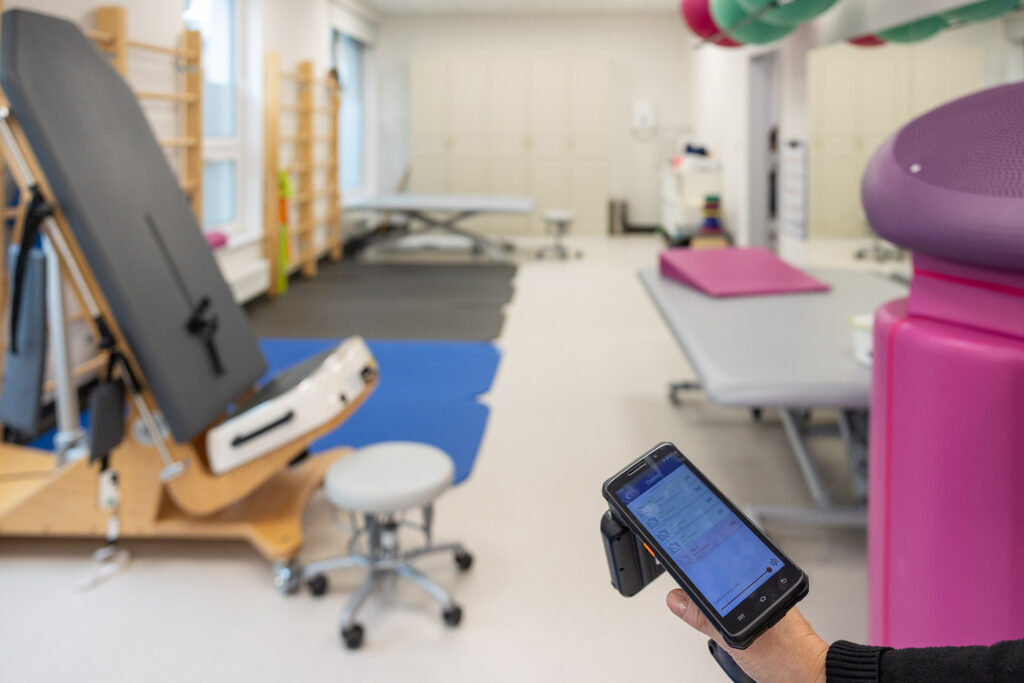


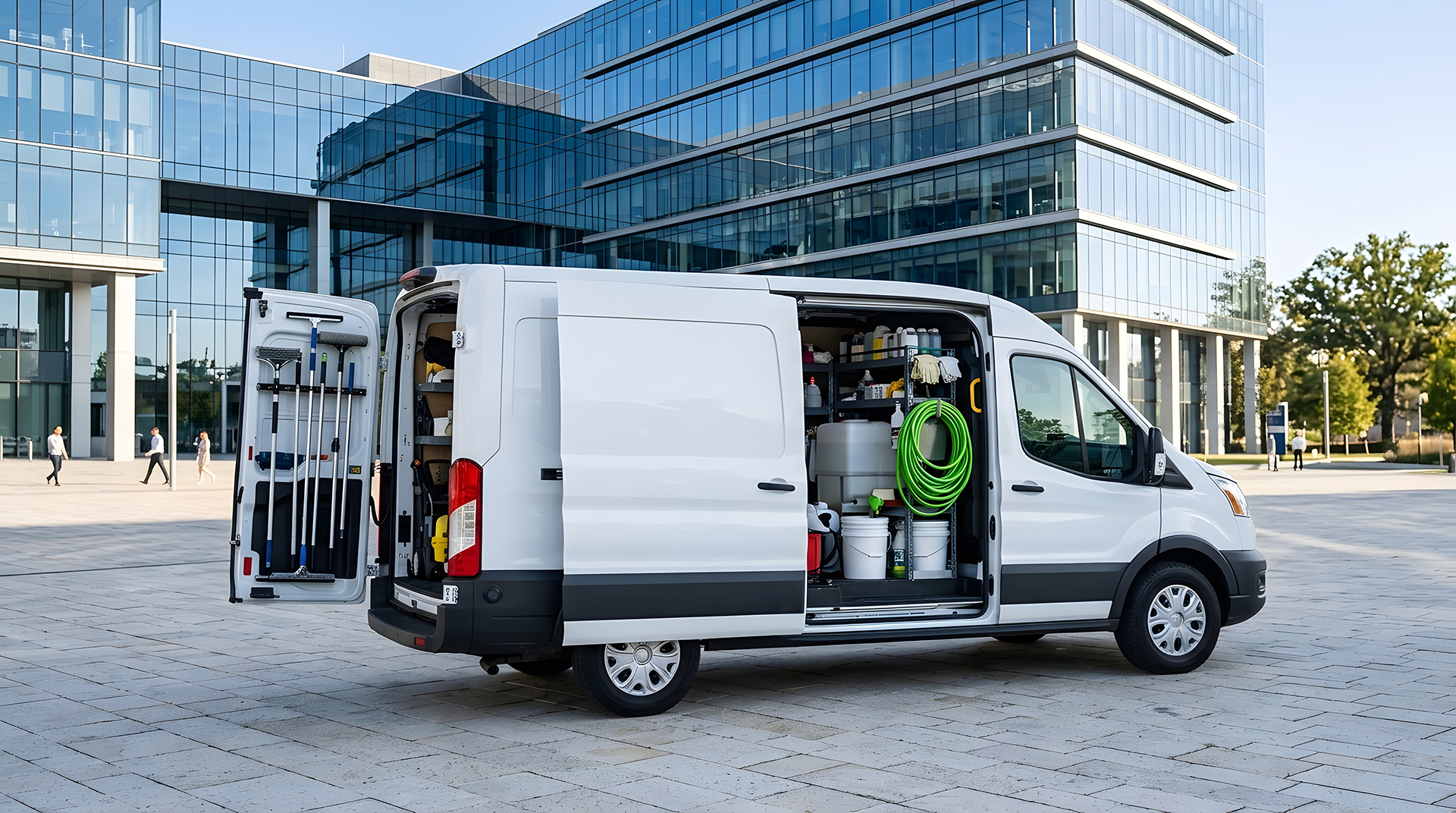
A UHF RFID reader in the cargo area checks for equipment automatically, and managers see the equipment status of the entire fleet in a web browser.
Starting Point
Client: a nationwide company providing specialist cleaning services.
The client’s teams work in the field and carry a large number of devices and accessories in their service vehicles. Equipment completeness was checked manually, before setting off for each job and after it was finished. The checks took time, and any mistake risked equipment being lost or left behind at a client’s site.
Challenges
- manual equipment completeness checks before and after each job,
- the risk of devices being lost or left behind at a client’s site,
- demanding conditions: moisture condensation, contact with water, detergents and chemicals, vibration while driving,
- a variety of storage locations: the floor, hooks on the side walls, shelves, and cartons in under-floor compartments.
Project Scope
| Area | Scope |
| Site | fleet of service vehicles: cargo area |
| Tagged equipment | backpack and industrial vacuum cleaners, pressure washers, steam cleaners, auxiliary equipment |
| Technology | UHF RFID in the 865–868 MHz band |
| In-vehicle kit | fixed RFID reader with GPIO inputs/outputs and relays, antenna, coaxial cable, tags |
| Software | web application with cloud data synchronisation |
Project Objectives
- automatic verification of vehicle equipment completeness,
- replacement of manual equipment inventory,
- reduced risk of devices being lost or left behind at a client’s site,
- shorter team preparation time before each job,
- real-time fleet visibility for managers.
Implementation
1. Tags Matched to Equipment and Working Conditions
We used three types of tags: for plastic and paper surfaces, for metal surfaces, and special hard tags. We selected them for high mechanical durability and resistance to environmental factors. Each tag was encoded and labelled with a number assigned to a specific device.
2. An RFID Kit in Every Vehicle
We installed a fixed RFID reader with an antenna in the cargo area. GPIO inputs/outputs and relays connect the reader to the vehicle’s electrical system, so reading starts automatically, for example when the ignition is switched on or at set intervals.
3. Software and Reports
- automatic inventory of vehicle contents,
- cloud data synchronisation,
- web browser view of the equipment in each vehicle,
- inventory history,
- daily, weekly and monthly reports.
4. Configuration and Testing
We fine-tuned the reader and antenna settings to the layout of the cargo area, so that the system registers equipment on the floor, on the walls, on shelves and in compartments.
Results
After optimal configuration, the system achieved full identification accuracy for devices in the cargo area. Completeness checks run on their own, missing items are visible immediately after each read, and managers monitor all vehicles in a single system.
Client Benefits
- Automation: checks start on their own when the vehicle is started.
- Time savings: the team sets off for each job sooner.
- Fewer equipment losses: missing items detected immediately after each inventory run.
- Transparency: a full view of the fleet in a single dashboard.
- Scalability: the system can easily be extended to more vehicles and other areas of the business.
Equipment carried in service vehicles? We will design automated equipment checks for your entire fleet.