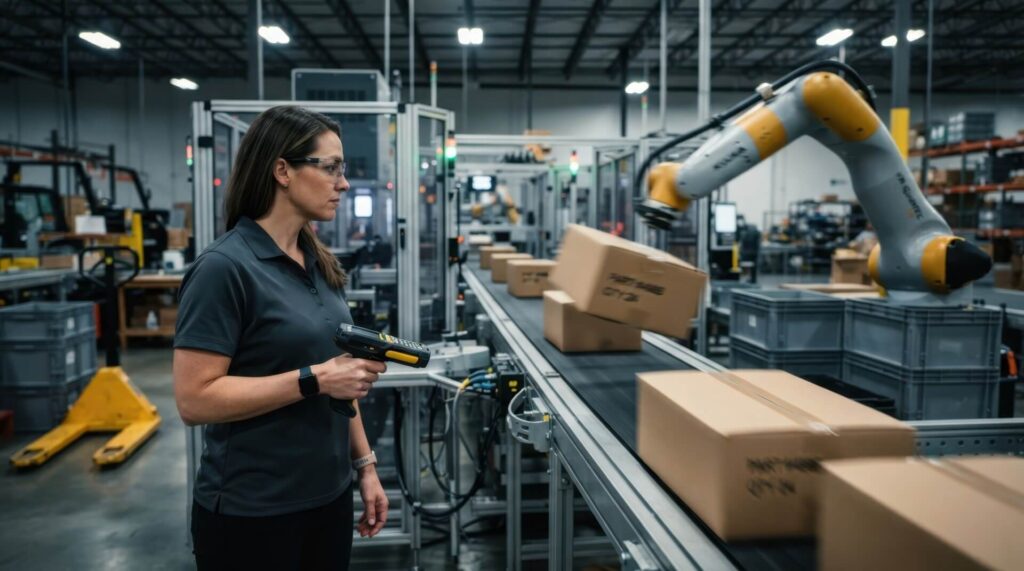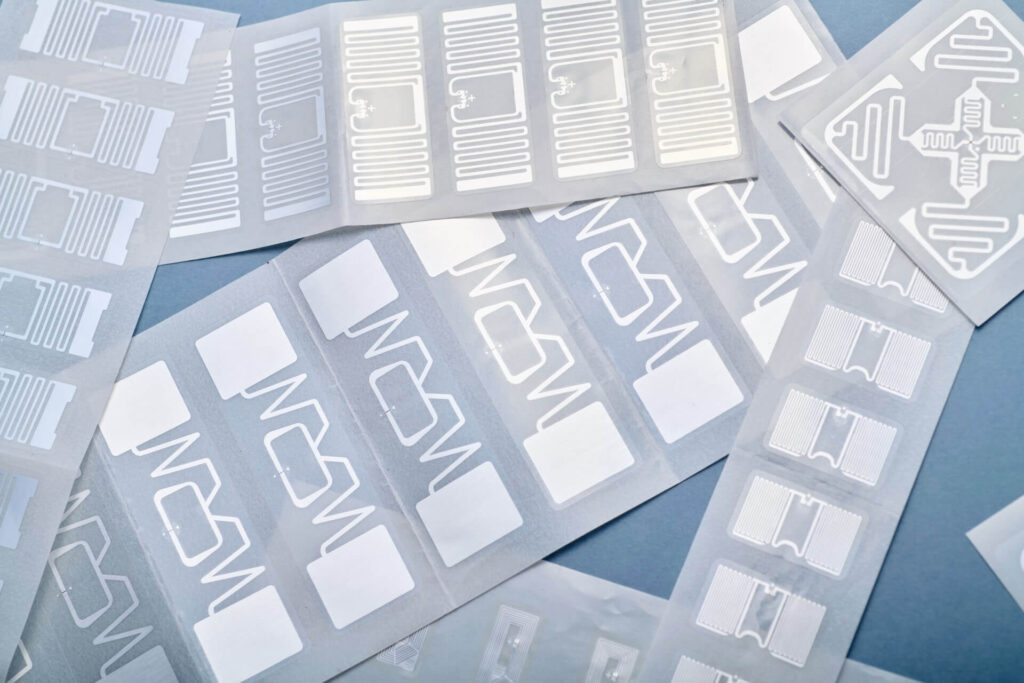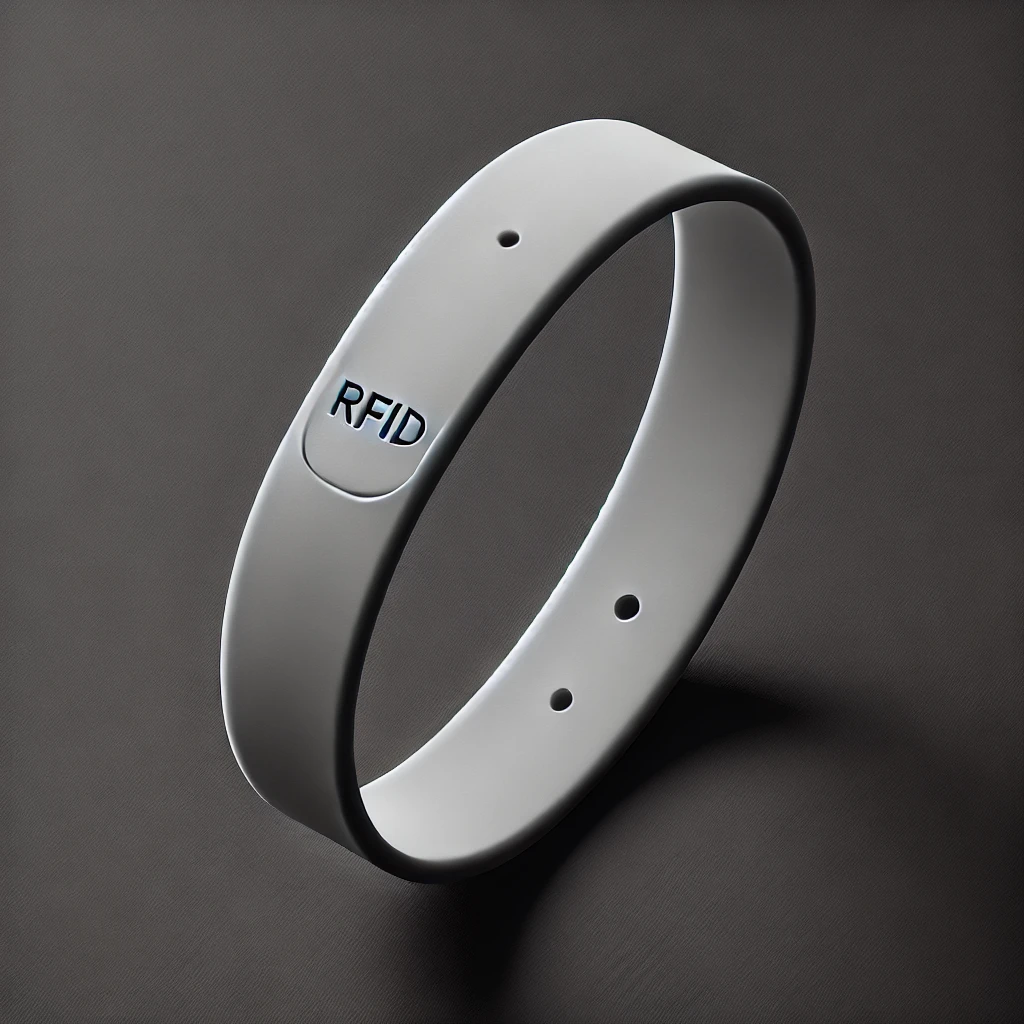



The ISS Tool Manager RFID system covers around 5,000 tools and devices on a bus manufacturer’s production floor. It shows where every tool is, keeps track of calibration dates and flags equipment taken outside its zone.
Project at a glance
| Client | Industry | Scale | Solution | Hardware |
| Bus manufacturer | Automotive | Production hall, approx. 5,000 tools and devices | ISS Tool Manager – software tailored to the client’s processes | UHF antennas, multi-port and handheld readers, signalling devices, RFID printers, tags |
Starting point: thousands of tools constantly on the move
The client builds buses in a production hall that uses around 5,000 tools and devices. With equipment rotating frequently between workers and workstations, its current location was hard to pin down, and calibration and warranty dates had to be tracked manually.
Tool management challenges
- Records – tools passing from hand to hand, with a risk of loss or misuse.
- Inventory – time-consuming audits and difficulty keeping data on available equipment up to date.
- Location – workers changing tool locations, and downtime spent searching for tools.
- Calibrations and warranties – deadlines with a direct impact on production quality.
- Equipment removal – financial losses and rising purchasing costs.
Project goals
- faster, more accurate inventory of tools and equipment,
- precise location and control of changes in location,
- oversight of calibration, maintenance and warranty dates,
- control of movement direction and protection against removal,
- software tailored to the client’s processes.
Implementation in 8 stages
1. Requirements analysis
A detailed analysis of tool circulation across the production halls and the client’s specific needs.
2. Component selection
UHF antennas, multi-port readers, light-and-sound signalling devices, handheld readers, RFID printers, equipment tags and proprietary ISS RFID software.
3. Software with the required functions
- alerts and email notifications of calibrations and expiry dates, with colour-coding for approaching deadlines,
- calibration history reports in .pdf and .xlsx formats,
- a tool record with parameters, photos and attachments (instructions, certificates, safety data sheets),
- inventory of rooms, areas and workstations, with completeness checks,
- a radar function that guides the user to a missing item based on signal strength,
- data import and export via .xlsx files, with editing from the reader and the mobile app,
- health and safety control: leaving zones and hazardous materials.
4. Component installation
Antennas, readers, printers and software installed in stages, without disrupting production.
5. Tag selection and tool marking
Tags matched to the tools and equipment, with guidelines on how to apply and mark them.
6. Staff training
Training in using the system and in good tool management practice.
7. Testing and optimisation
Functional tests confirming that all components work as required.
8. Monitoring and support
Procedures for monitoring system performance and technical support for users.
Results: tools, calibrations and zones under control
The rollout improved tool management in four key areas: inventory, location, calibration control and equipment movement monitoring. The team works in an automated environment, and the system’s flexible architecture allows further modules to be added – for security, movement control and zone compliance.
Benefits for the manufacturer
- Less downtime – faster inventory and easier equipment retrieval.
- Production quality – automatic calibration reminders.
- Lower costs – fewer lost and removed tools.
- Grows with the business – a system that can be expanded with new functions.
Solution used: ISS Tool Manager
A system for inventory, location and oversight of tools in manufacturing plants.