

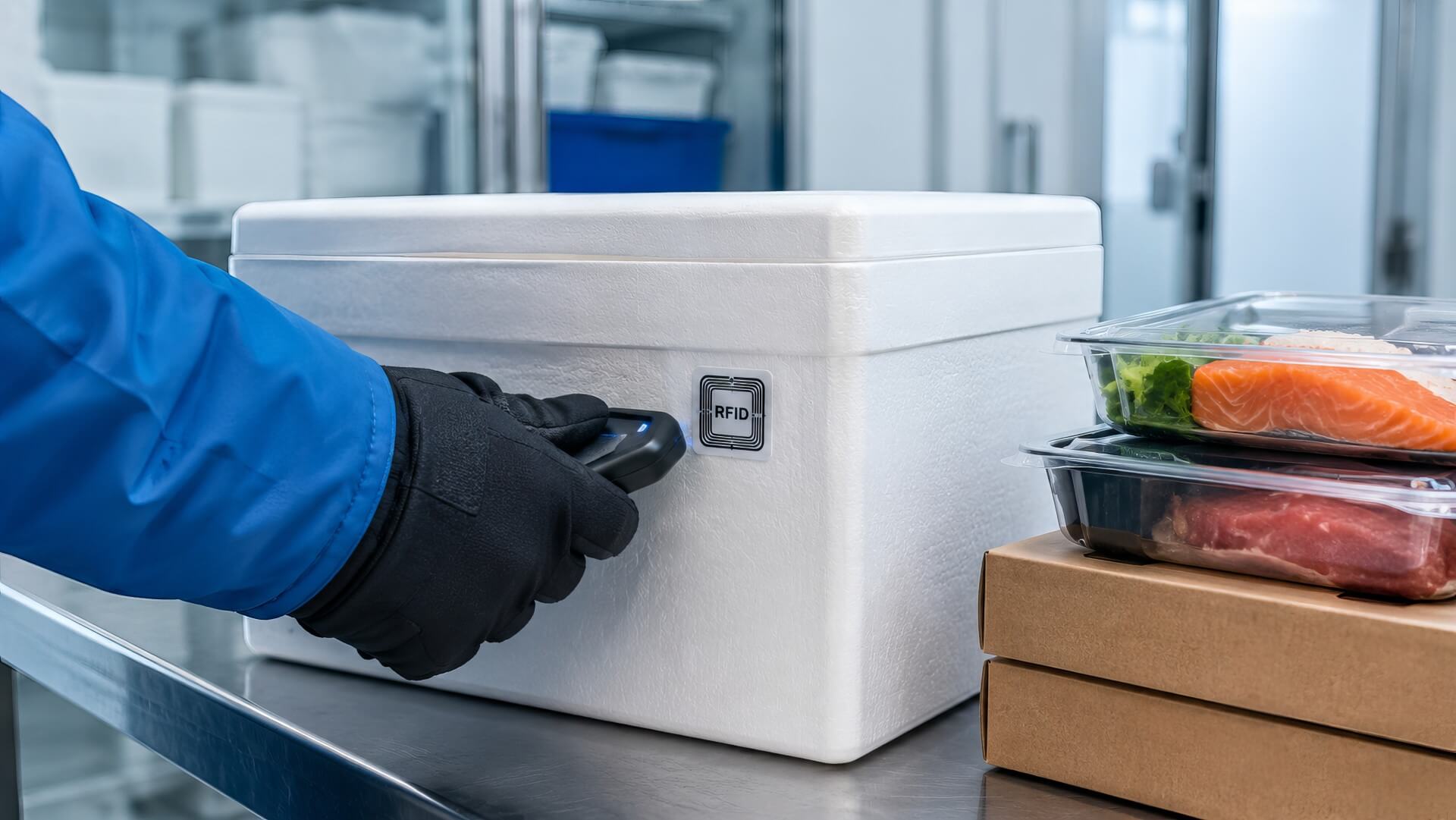
The food industry is subject to legally binding traceability requirements at every stage of the supply chain. We explain how automatic RFID identification supports food safety, temperature control, stock rotation and audit readiness.
Challenges: EU-mandated food traceability
Traceability is the ability to follow the movement of a food, feed or raw material through all stages of production, processing and distribution – as defined by the Codex Alimentarius, the collection of standards developed by the FAO and WHO. In the European Union, this obligation is set out in Article 18 of Regulation (EC) No 178/2002, applicable since 1 January 2005, under the “one step back – one step forward” principle: a business knows who supplied a product and to whom it passed it on.
- manual transcription of batch numbers and production dates,
- reconstructing batch history for audits and complaints,
- products with a short shelf life,
- temperature control in transport and storage,
- moisture, cold and strict hygiene requirements.
How RFID works in a food plant
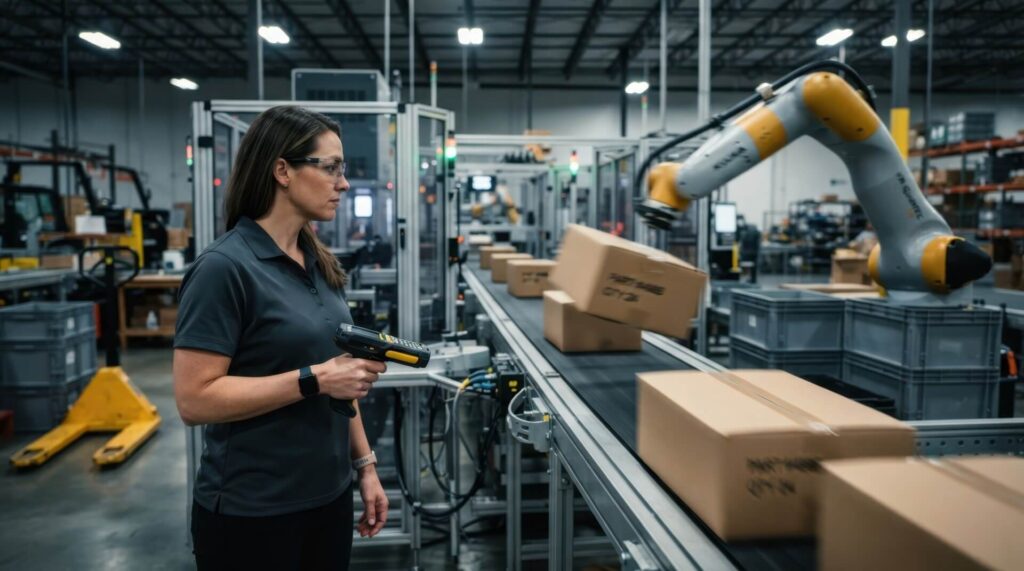
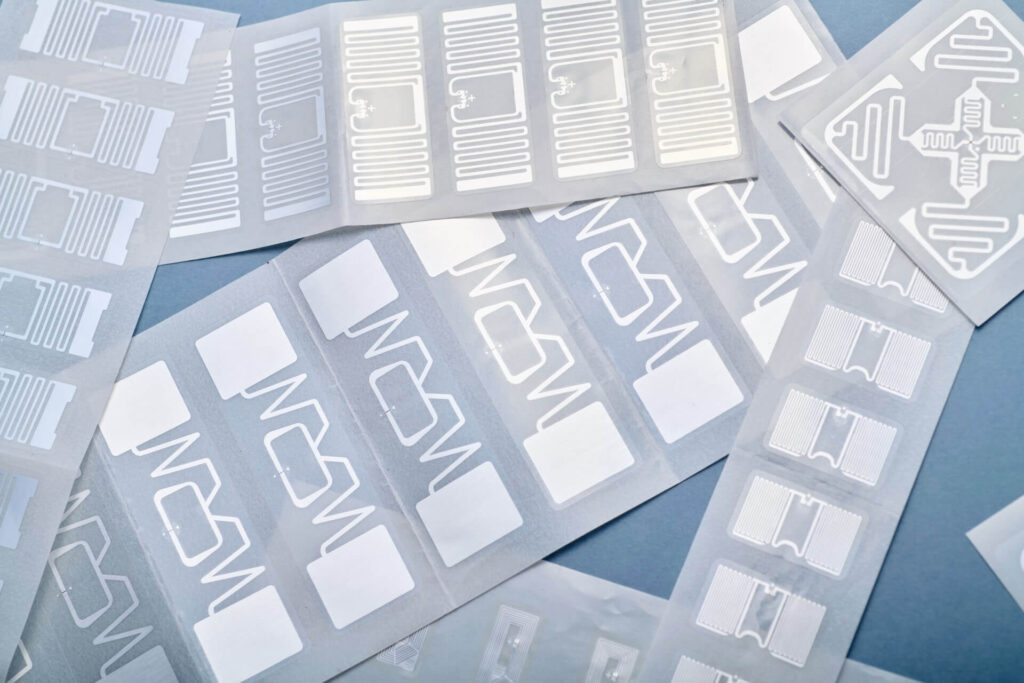
Containers, trays, pallets and outer packaging receive RFID tags with a unique identifier. Readers at raw material intake, on production lines, in cold stores and at dispatch docks read many tags simultaneously and without contact.
The data – production date, batch number and product type – flows automatically into the ERP system, reducing manual entry and the risk of transcription errors.
RFID applications in food production and distribution
- Batch tracking
Every stage – from raw material intake, through processing, to packing – is added to the batch history with no extra work for the team.
- Cold chain
Tags fitted with temperature sensors record transport and storage conditions in real time. The plant responds quickly to any deviation and limits the risk of losses.
- FIFO principle
The system identifies the products with the shortest shelf life so they are dispatched or sold first.
- Product recalls
RFID pinpoints every unit of a faulty batch in the plant, warehouses and retail chains, so a recall covers only the affected goods.
- Audits and inspections
Data on batches, dates and product flow is available in the system on demand, instead of being reconstructed from paper records.
- Choosing tags for washdown, moisture and low temperatures
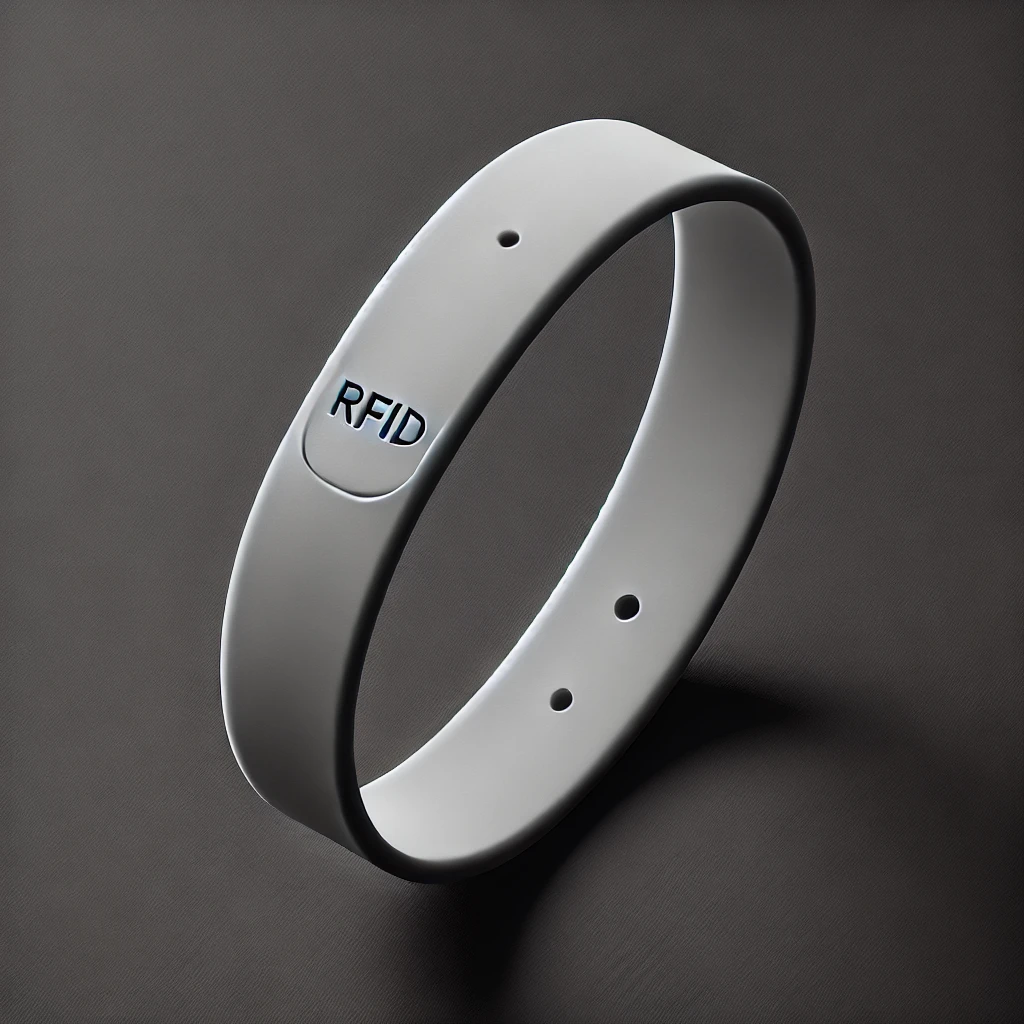
Food plants rely on tags that withstand washdown, moisture and low temperatures, attached in line with hygiene requirements. Contactless bulk reading fits well with work in cold stores, high-bay warehouses and on production lines.
Benefits of RFID for the plant and the quality team
- Full traceability – batch history from raw material to dispatch.
- Targeted recalls – scope limited to the affected batch.
- Less food waste – dispatch order in line with FIFO.
- Hygienic operations – contactless reading of many tags at once.
- Smooth audits – data recorded automatically.
How to prepare an RFID rollout in a food plant
- Map the batch journey – from raw material intake to dispatch, including control points.
- Choose the tag carrier – container, tray, pallet or outer packaging.
- Test tags in plant conditions – in the washroom, cold store and on the line.
- Agree the data flow – what information reaches the ERP and at what point.
In practice: automated dispatch control
At the Rossmann distribution centre in Łódź, a UHF RFID system oversees around 40 docks and more than 200,000 logistics containers. Verifying that goods match the vehicle and destination store works the same way when dispatching food batches.
→ Case study: “Around 40 docks and 200,000 containers under control – RFID loading automation at the Rossmann distribution centre”
FAQ: RFID in the food industry
Since 1 January 2005, under Article 18 of Regulation (EC) No 178/2002.
Tags with temperature sensors record transport conditions in real time and make it possible to respond quickly to any deviation.
Readers work contactlessly and read many tags at once, without touching the product or its packaging.
It pinpoints every unit of a faulty batch across the supply chain, so the recall covers only the affected goods.
ISS RFID designs and implements RFID solutions tailored to each client's production and logistics processes, in any industry. To find out how RFID can support food traceability and safety in your business, get in touch and we will prepare a tailored offer. Leave your contact details and we will call you back within 24 hours.