

RFID Wristbands – What You Should Know
Are RFID tags just labels or hard tags? Not at all! Tags are also available as hang tags, cards and silicone wristbands. In this article, we take a closer look at what RFID silicone wristbands are, how they are used and what benefits they offer.
Features of RFID Wristbands
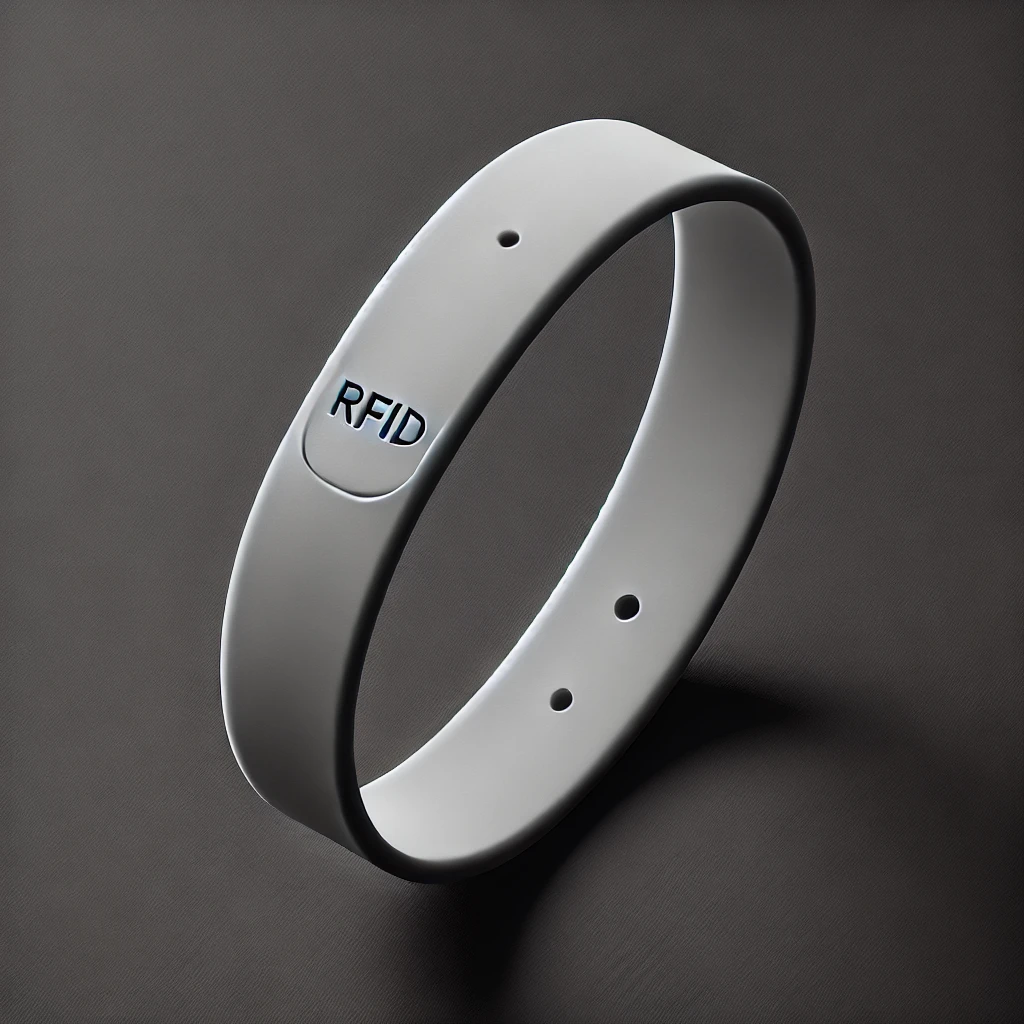
RFID silicone wristbands with a chip, also known as contactless or proximity wristbands, are lightweight, waterproof and highly durable. Easy to put on, modern in design and exceptionally functional, they are an ideal solution that can be used in a wide range of areas. Thanks to a small RFID chip and antenna embedded in the silicone, they enable contactless data transfer between the chip and a reader via radio waves. Which projects are they best suited for?
Uses of RFID Proximity Wristbands
Monitoring event participants
At large-scale events such as conferences, trade fairs and festivals, RFID wristbands enable effective monitoring of attendee movement. Organisers can track the flow of people and see which stands attract the most interest.
Managing staff, students or patients
In companies, schools and healthcare facilities, RFID wristbands can be used to monitor the attendance of employees, students or patients. For example, RFID wristbands make it possible to identify individuals in specific zones without having to scan cards or use visual identification. Read more on this topic in our article: https://issrfid.com/en/knowledge-base/rfid-technology-in-healthcare/
Advantages of RFID Wristbands
Versatility
RFID wristbands can perform many functions at once – from access control to activity tracking. As a result, a single device replaces several others and can be reused many times, making it a convenient and cost-effective solution.
Durability and resistance
Made from high-quality material, RFID wristbands are resistant to mechanical damage, water, and both high and low temperatures. This makes them ideal for use in demanding environments such as swimming pools, beaches and ski resorts.
Ease of use
RFID silicone wristbands are remarkably easy to use. Simply being near a reader is enough to transmit data, eliminating the need for direct physical contact and/or line of sight.
Security
RFID technology provides a high level of security. Data stored on the chip is protected, and RFID systems further enhance its security through encryption and password protection.
Personalisation
RFID silicone wristbands can easily be tailored to the needs of a specific company or event. They can come in various colours, patterns and with a logo, making them not only functional but also attractive.
The Future of RFID Proximity Wristbands
As technology advances, RFID wristbands will continue to grow in popularity. Their versatility and ease of use mean they can be applied in ever more areas. From smart cities and public transport to healthcare – the possibilities are almost limitless. It is well worth following the development of RFID technology, as its potential is sure to bring many more new and exciting opportunities. If you’re curious how RFID can simplify your processes, get in touch with us!