

A component, tool or big bag fitted with an RFID tag is an asset whose location, status and history are known to the system. We explain how automatic identification organises material flow from raw material to finished product, shortens tool inventory and supports traceability in industrial plants.
Challenges in managing production and plant assets
A manufacturing plant handles thousands of components, semi-finished products, tools and containers. Each of these assets changes location several times per shift, and manually collected information quickly becomes outdated.
- manual records and item-by-item barcode scanning at successive stages,
- tools and fixtures circulating between workstations and employees,
- calibration, inspection and warranty deadlines that affect product quality,
- batch traceability required by customers and auditors,
- raw materials stored in the yard, in high-bay warehouses and in changing conditions.
How RFID works in a manufacturing plant
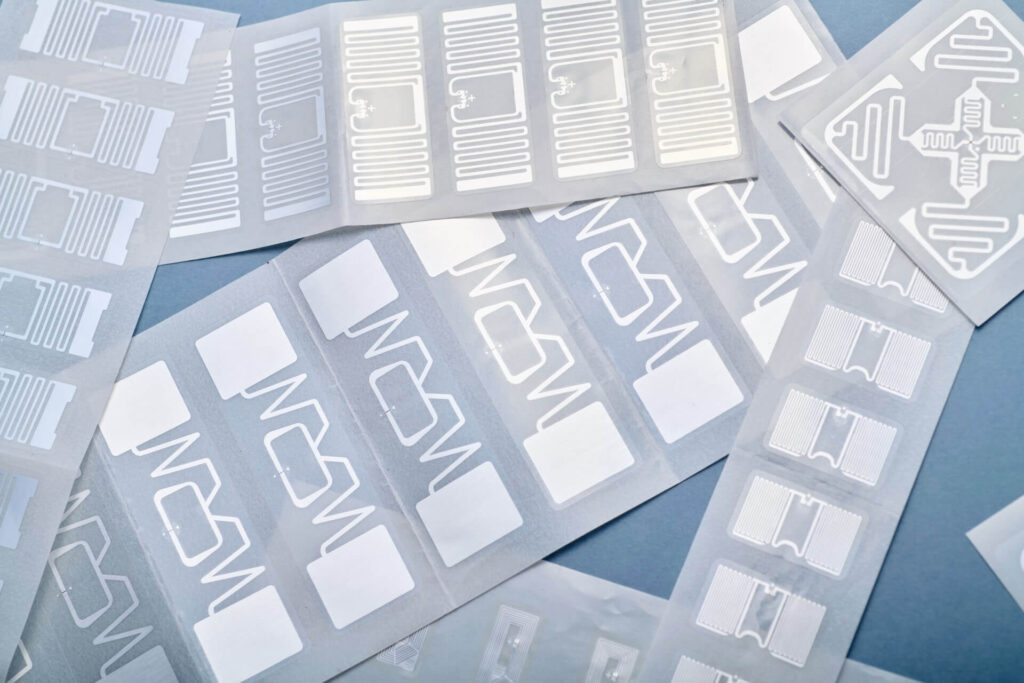
Components, containers, pallets, tools and carriers receive RFID tags with a unique identifier. The software links it to an asset record: batch number, production order, location, status and operation history.
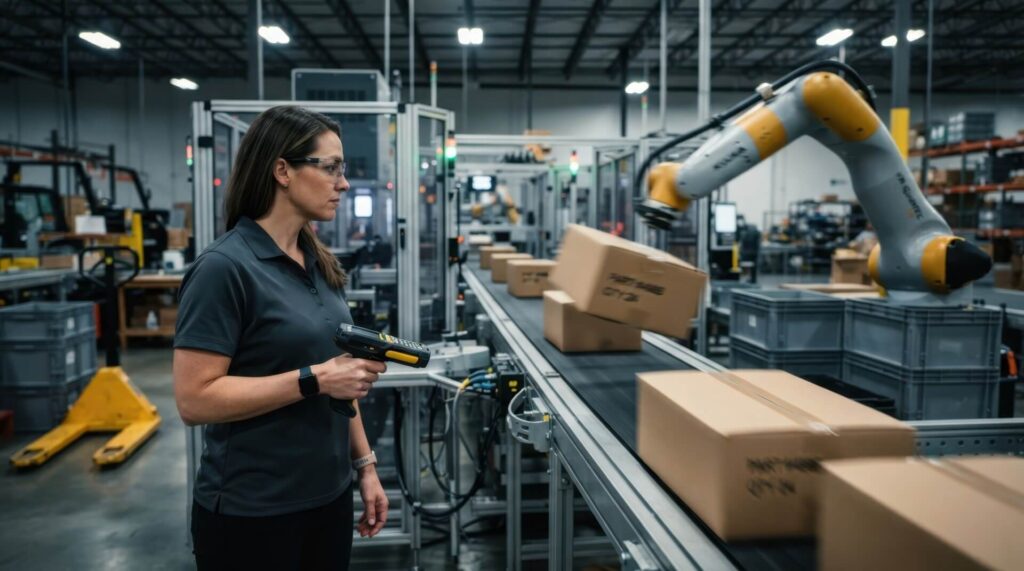
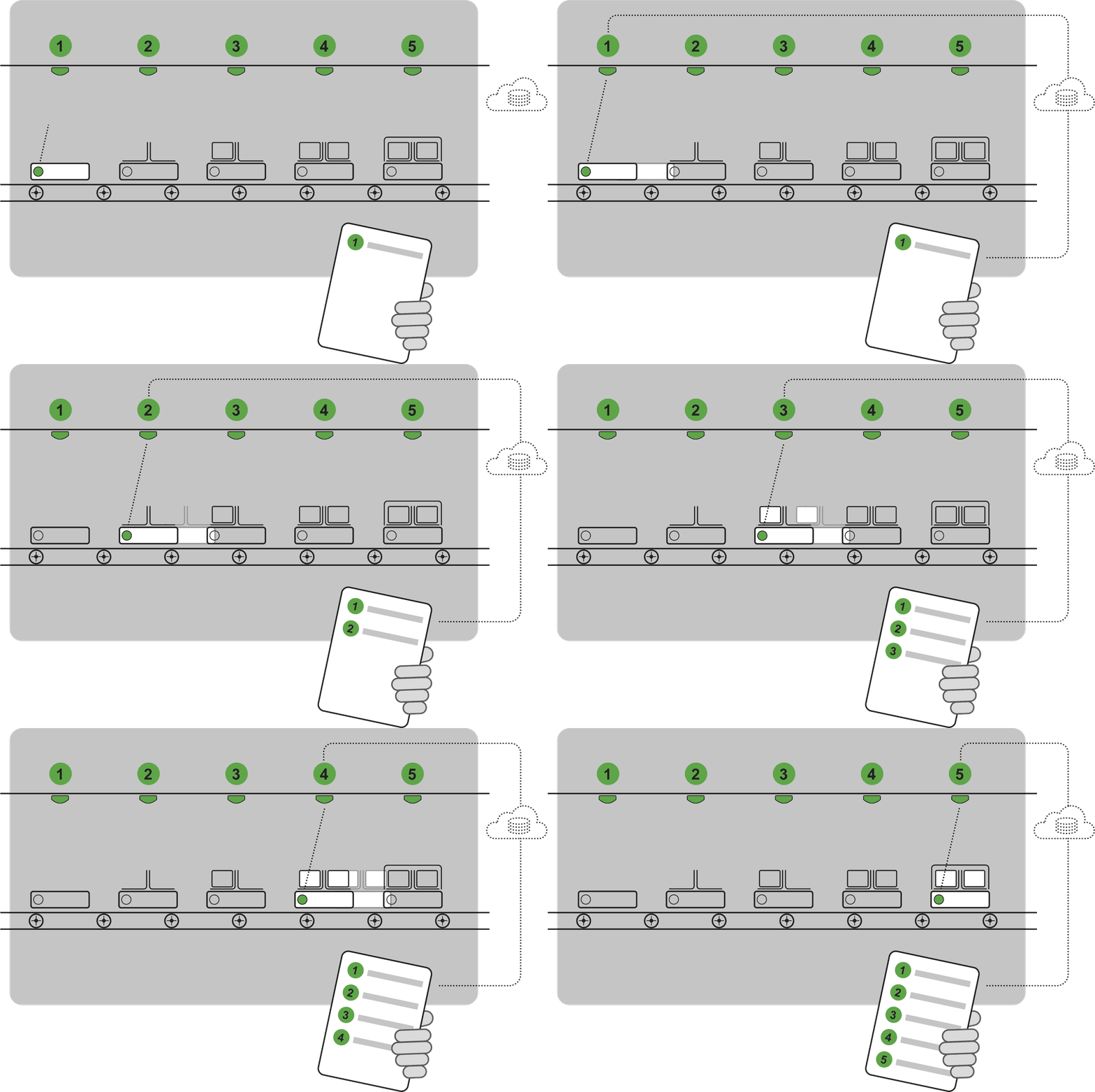
Fixed readers with antennas at flow points (at gates, on lines, in the warehouse and in the yard) register movement automatically, including its direction. Mobile devices handle stocktaking, verification and searching for individual items. A single read captures many tags at once, at a distance and through packaging, and the information flows into the plant’s ERP or MES systems.
RFID applications in manufacturing and industry
- Tracking components and work in progress
Every stage, from raw material intake through machining and assembly to packing, is recorded in the order history. The shift supervisor sees at which workstation a given batch is located.
- Tools, fixtures and calibration
The tool record holds parameters, photos, instructions and certificates. The system sends e-mail reminders about calibrations and inspections, and the radar function in the reader guides the user to the item being searched for.
- Raw material and finished goods warehouse
RFID gates at entrances register pallet receipts and dispatches, so stock levels update in real time.
- Storage yard and outdoor assets
Fixed readers in the yard track big bags, containers and carriers around the clock, in all weather conditions.
- Returnable packaging and carriers
Reusable containers, crates and pallets circulate between the plant, suppliers and customers with a complete circulation history.
- Work zones and health and safety
Antennas at zone exits register equipment leaving the designated area, and light and sound signals alert staff. The system also supports supervision of chemicals and materials requiring special control.
Selecting tags for metal, high temperatures and outdoor conditions
A production hall means metal structures, oils, vibration, high temperatures and industrial washing. Suitable solutions include on-metal tags, hard tags in housings resistant to impact and chemicals, high-temperature versions and labels printed on site with an RFID printer.
In the storage yard, tags resistant to moisture and changing weather conditions perform well. We select the model and mounting position during tests under the plant’s actual conditions.
Benefits of RFID for a manufacturing plant
- Full traceability – batch history from raw material to shipment.
- Shorter downtime – tools and components found right away.
- Consistent product quality – automatic calibration and inspection reminders.
- Fast inventory – racks, zones and the yard read in a single pass.
- One shared source of information – logistics, production, quality control and the warehouse work on the same up-to-date data.
How to prepare an RFID implementation in a plant
- Flow map – the asset’s route from raw material intake to shipment, with points where location or status changes.
- Starting area – tool room, warehouse, assembly line or storage yard.
- Tag tests under plant conditions – on metal, in high-temperature zones and outdoors.
- Organised records – exporting current data to an .xlsx file speeds up import into the system.
- Tagging and training plan – new assets tagged on receipt, existing ones in stages, and every shift’s team trained before go-live.
Case in point: 500 big bags under control 24/7
For a manufacturer of plastic regranulates, we implemented a UHF RFID system in an open storage yard. Fixed readers at key points, supported by mobile devices, register the movement of approx. 500 big bags around the clock, 7 days a week. Logistics, production, quality control and the warehouse use one shared, up-to-date database.
→ Case study: “500 big bags under control 24/7 – RFID in the storage yard of a regranulate manufacturer”
→ More from the production hall: “5,000 tools under control – RFID in a bus manufacturer’s production hall (ISS Tool Manager)”
Frequently asked questions about RFID in manufacturing
On-metal tags ensure stable reading on tools, housings and structures; the model is selected during tests.
Yes. Information on asset movement and status flows into the plant’s systems, and we define the integration method during the analysis stage.
Yes. Weather-resistant tags and fixed readers operate continuously, around the clock.
The reader captures many tags at once, at a distance and through packaging, so a single pass covers an entire rack, zone or yard.
With a process analysis and tag tests under plant conditions. The next step is a pilot in one area, followed by roll-out to the remaining ones.