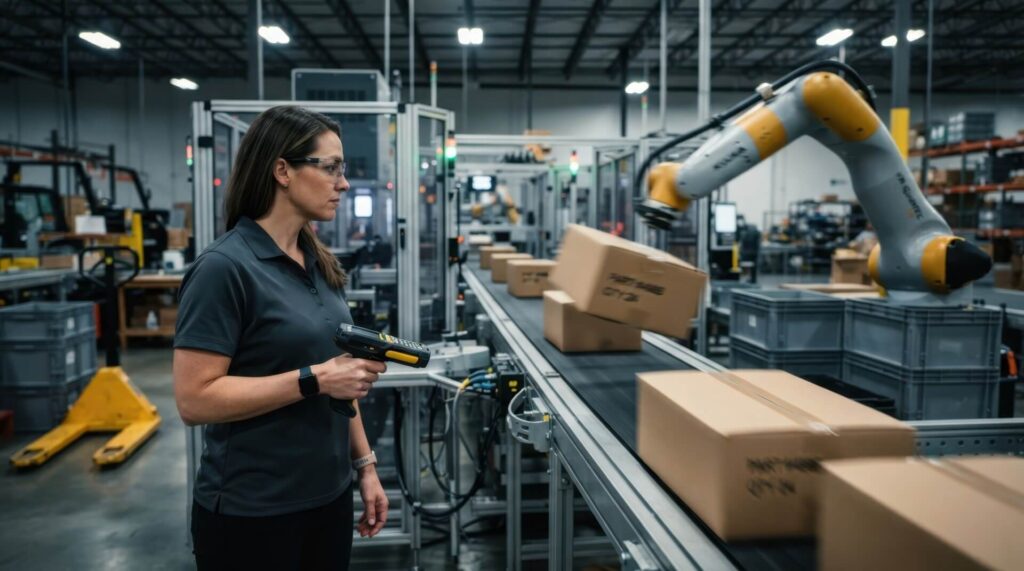



An RFID reader installed in the vehicle checks equipment completeness automatically – when the vehicle starts or at set intervals. The rollout covered the fleet of a nationwide cleaning company.
Project at a glance
| Client | Industry | Scale | Solution | In-vehicle hardware |
| Nationwide cleaning company | Cleaning services | Fleet of service vehicles used by cleaning crews | UHF RFID system (865–868 MHz) with cloud software | Fixed reader with relays and GPIO, antenna, coaxial cable, tags for different surfaces |
Starting point: manual checks of vehicle equipment
Cleaning crews travel to clients in vehicles packed with specialist equipment. Checking that the equipment was complete before and after each job required manual checks and posed a major organisational challenge.
Challenges: equipment and conditions in the cargo area
- a wide range of equipment: backpack and industrial vacuums, pressure washers, steam cleaners, accessories,
- various storage places: the floor, wall hooks (ladders, brushes), shelves, boxes under the floor,
- steam condensation and occasional contact with water,
- chemicals and detergents,
- vibration and movement while driving.
Project goals
- automatic checks of vehicle equipment completeness,
- replacing manual inventory,
- reducing the risk of equipment being lost or left at a client’s site,
- shorter crew preparation time before a job,
- real-time visibility of vehicle equipment for managers.
Implementation in 5 stages
1. Technology selection
A UHF RFID system in the 865–868 MHz band: many tags read simultaneously from a distance of several metres. The key output – the presence or absence of each item in the cargo area.
2. Equipment selection and tagging
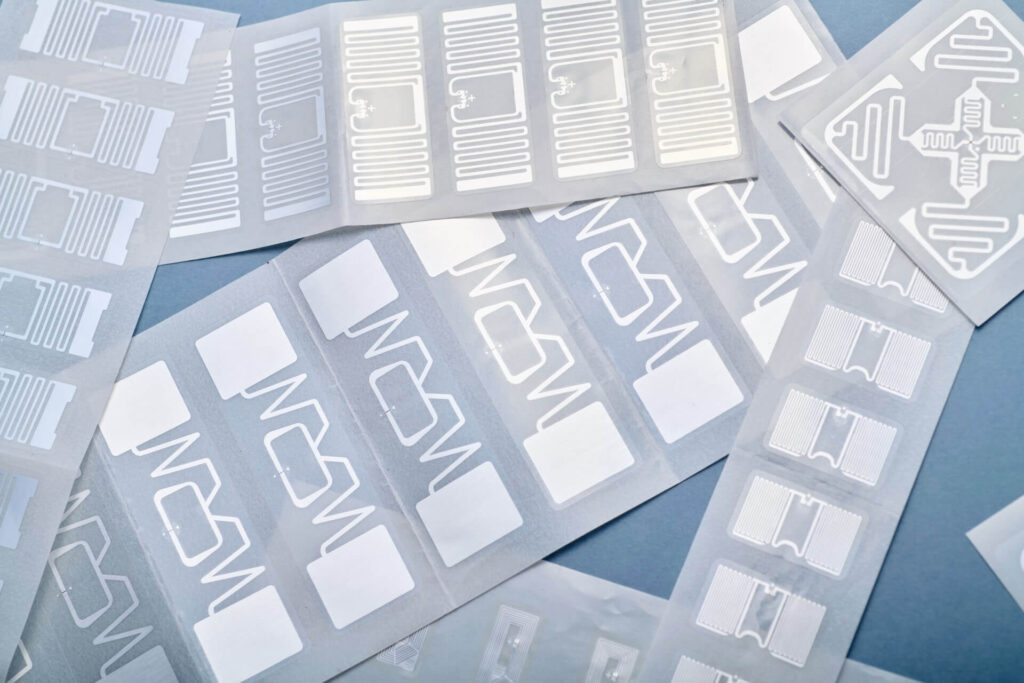
Tags for plastic and paper surfaces, for metal, and special hard tags resistant to mechanical and environmental stress. Each tag was encoded and assigned to a specific item.
3. Installing the RFID kit in the vehicles
Each vehicle received a fixed reader, antenna, coaxial cable and a full set of tags. Relays and GPIO inputs/outputs connect the reader to the vehicle’s electrical system and trigger reads automatically.
4. Software launch
Automatic vehicle inventory, cloud data sync, a browser view of the equipment, inventory history, and daily, weekly and monthly reports.
5. Automatic inventory configuration
The audit starts when the vehicle is switched on or at set intervals.
Results: fully automated inventory
| Area | Result |
| Identification accuracy | Complete, after optimal system configuration |
| Inventory process | Fully automated |
| Item identification | Instant, covering all equipment |
| Missing items | Detected immediately |
| Reporting | Automatic |
Benefits for the company
- Automation – verification runs without staff involvement.
- Time savings – drivers and operators gain time for the job.
- Fewer equipment losses – missing items detected right after the audit.
- Transparency – managers see every vehicle in one system.
Solution used: logistics and mobile unit control
An RFID system that scales to larger fleets and further areas of the business.