


How to Control Inventory Levels? RFID and Proven Inventory Management Methods
Effective inventory control is one of the pillars of efficient logistics. Proper stock management today requires not only experience but also technological support. One of the key technologies is RFID – a solution that transforms the way companies record, locate and monitor their assets.
Why Manual Inventory Control Fails
Warehouses operate in constant motion – receiving, issuing, relocating and returning goods. In such conditions, errors or delays are easy to make, especially when data is updated manually or with a delay, for example in a spreadsheet. Inventory mistakes can lead to shortages, overstock, picking errors or loss of visibility over goods.
This is why regular inventory analysis is important – but even more crucial is continuous, automated data control, without the need to manually scan each item.
How RFID Supports Inventory Control
RFID (Radio-Frequency Identification) enables automatic identification of goods using radio waves. This allows multiple tags to be read simultaneously, even without direct line-of-sight.
In practice, this means:
- stock movement data can be collected in real time,
- inventory counting does not require stopping warehouse operations,
- the number of errors caused by manual handling is reduced,
- the system automatically reports discrepancies.
RFID implementation does not require rebuilding warehouse infrastructure – thanks to modular components such as RFID gates, antennas and readers. Moreover, RFID systems integrate with internal systems such as SAP, ERP or WMS. This integration does not disrupt existing processes; it enhances them smoothly.
Physical vs. Book Inventory
It is important to distinguish between two complementary types of inventory:
- Physical inventory – the actual verification of how much stock is physically present in the warehouse. It reveals errors, discrepancies or shortages.
- Book inventory – the monetary value of inventory based on system records.
A good practice is to perform physical inventory before book inventory – real stock levels should form the basis for updating financial records.
Inventory frequency depends on warehouse size and assortment volume. It may be:
- periodic (monthly, quarterly, yearly), or
- continuous – maintained in real time through a WMS system, which RFID naturally supports by eliminating the need to halt operations for stock-taking.
Inventory Optimization
RFID combined with dedicated software enables better planning of deliveries, monitoring minimum and maximum stock levels and forecasting consumption. This leads to inventory optimization – reducing unnecessary stock, shortening picking cycles and improving turnover.
RFID also supports better use of warehouse space and simplifies consolidation of goods in designated locations, improving overall logistics efficiency.
A helpful complement to this approach is ABC classification, which divides inventory based on value and turnover. It allows companies to focus attention and more frequent checks on the most important items instead of treating all stock equally.
Warehouse Security and Automated Reporting
Beyond improving data accuracy, RFID enhances warehouse security. The ability to track product movement, monitor access to warehouse zones and protect sensitive assets makes inventory control more transparent.
Automated reporting enables faster decision-making and risk reduction, improving the fluidity of the entire supply chain.
How to Start Implementing RFID in a Warehouse
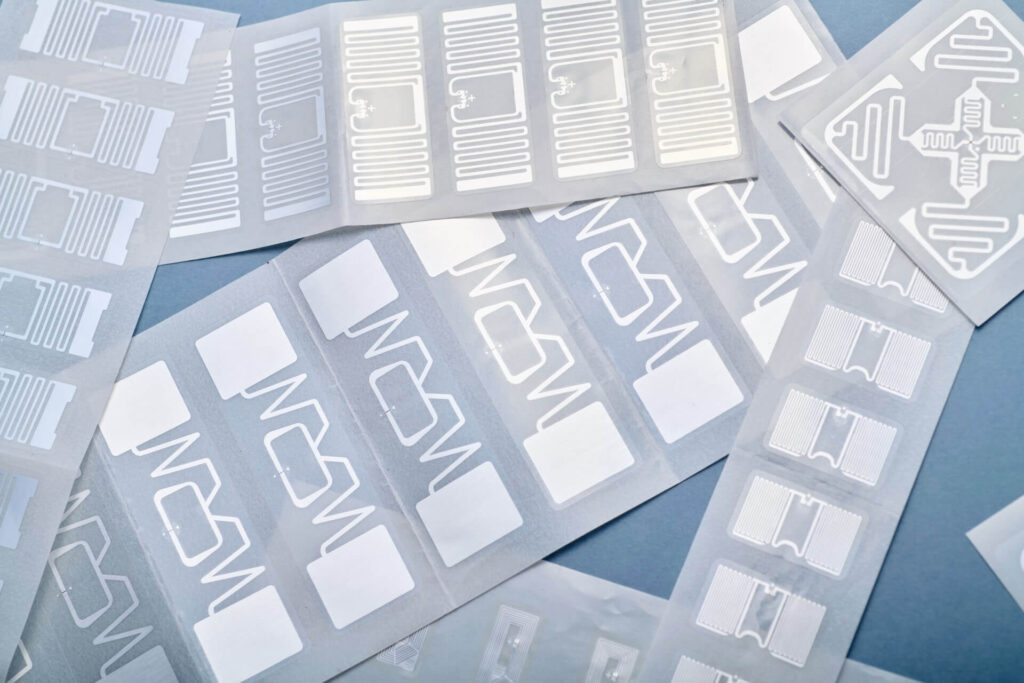
RFID implementation can begin gradually – with selected zones, processes or product groups. The key is choosing the right tags for the environment and type of goods, and conducting a pilot test, which verifies assumptions in real conditions. This approach minimizes risk, helps assess real benefits and allows precise planning of full deployment.
Frequently Asked Questions
Physical inventory verifies actual stock levels, while book inventory determines their monetary value based on system records. Best practice: physical inventory should precede book inventory.
It depends on warehouse size and assortment volume – periodic (monthly, quarterly, yearly) or continuous, supported by WMS and RFID.
No – modular RFID components (gates, antennas, readers) do not require infrastructure reconstruction.
Yes – RFID systems integrate smoothly with these platforms, supporting existing processes without disrupting them.
Yes – at ISS RFID we conduct Proof of Concept (PoC) tests before full implementation. This allows you to see how the technology works in your real environment, evaluate its effectiveness and verify project assumptions before making an investment decision. The pilot helps select the right tags, assess working conditions, minimize risks and plan the next stages of deployment.