


RFID in E-commerce: How Automatic Identification Streamlines Online Retail
RFID (Radio Frequency Identification) is a technology that identifies goods contactlessly using radio waves. Its importance in e-commerce is growing for one simple reason: an online store can only sell what is actually in the warehouse. Inaccurate stock data means a delayed shipment, a cancelled order or a dissatisfied customer.
How Does RFID Technology Work in an E-commerce Warehouse?
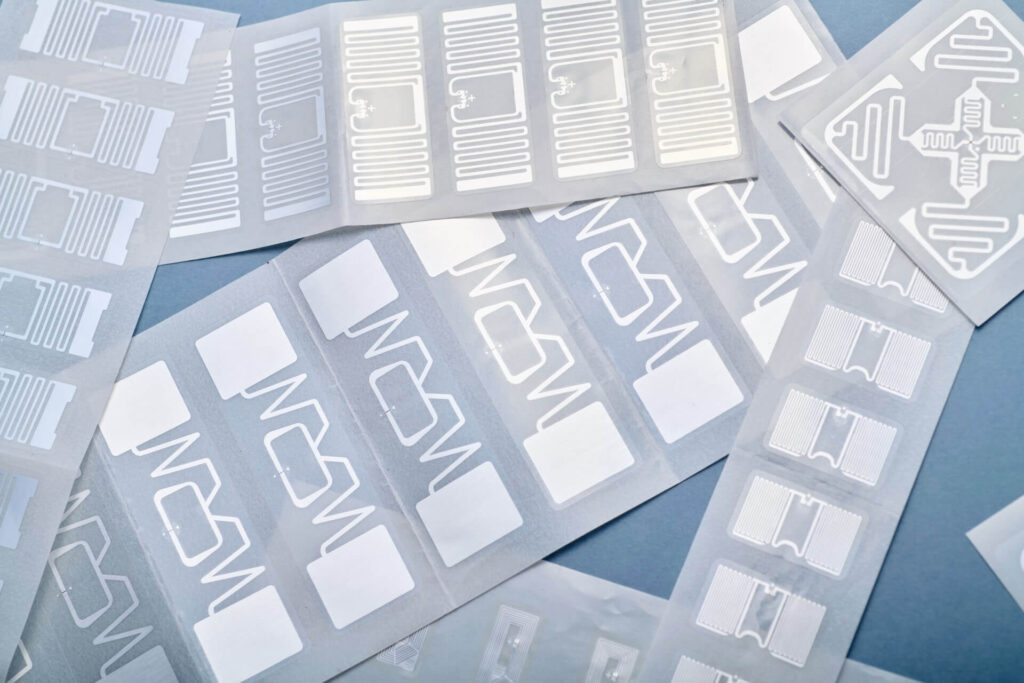
RFID technology is based on four elements: tags, readers, antennas and software. The tag acts as a data carrier and contains a unique identifier. It usually takes the form of an RFID label attached to a product, packaging or container. The reader emits a radio signal and the tag responds. The software then passes the data to the WMS, the ERP system and the online store platform.
The tags used in e-commerce warehouses are most often passive UHF tags. They are thin, lightweight and readable from a distance of several metres. A different model is selected depending on the packaging type: cardboard, film, metal cans or bottles containing liquid. RFID tags are read at several points in the warehouse:
- Handheld readers: inventory counts and locating products on racks, with results displayed in a mobile app
- RFID portals: receiving and dispatch docks
- RFID tunnels and read tables: verifying parcel contents during packing
- Fixed readers: buffer zones and sorting lines
Why Is Inventory Accuracy Critical in E-commerce?
In the traditional barcode-based model, each product has to be scanned individually with a direct optical line of sight to the code. RFID requires neither. The reader captures multiple tags simultaneously, with no need to position each product correctly.
Industry research, including studies by the RFID Lab at Auburn University and ECR Retail Loss analyses, shows that RFID implementation can raise inventory record accuracy from a typical 60-75% (with manual counts or barcodes) to 95-99%. In practice, this puts an end to situations where the store shows a product as available when it is actually out of stock. This is one of the most common causes of cancelled online orders.
Inventory Counts: Reading RFID Tags Without Halting Shipments
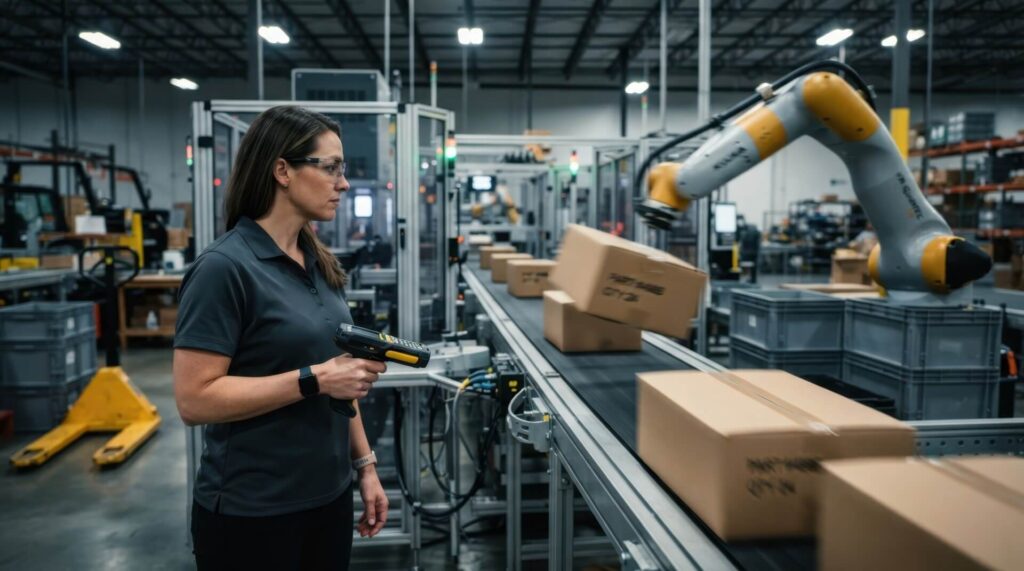
In e-commerce, a traditional inventory count means halting shipments or working overtime. With an RFID reader, an employee can read the contents of an entire rack in seconds. There is no need to take down and move cartons or scan labels one by one.
Automated reading takes the load off staff and makes cycle counting possible, daily or weekly instead of once a year. Handheld readers can also work offline and upload results once they reconnect to the network.
The simplest starting point is the off-the-shelf RFID Inventory and Location System (SIL), a ready-to-deploy package. It includes the ISS NEO handheld reader, proprietary software, a one-year licence, tags and online training. It lets you get stock levels in order quickly and later expand the system to further zones and integrations.
RFID and Omnichannel: Real-Time Stock Visibility
More and more retailers combine online and in-store sales in an omnichannel model. Customers order online and collect in store, or return a product bought in store through the online channel. This model requires the system to know exactly how much stock there is and where it actually is: in the central warehouse, in a specific store or in transit.
RFID supports this by providing real-time inventory visibility across all sales channels simultaneously. This makes it easier to fulfil buy online, pick up in store (BOPIS) orders without the risk of errors.
RFID in Order Picking
Order picking is the process of retrieving goods from the warehouse according to a customer order. In practice, several models are used to organise this process:
- “Man-to-goods” model: the picker travels to the storage location
- “Goods-to-person” model: the goods are delivered to the picker’s workstation, usually through automation
- Single-order picking: one order is fulfilled at a time
- Batch picking: multiple orders are fulfilled simultaneously
- Zone picking: the warehouse is divided into zones assigned to individual pickers
RFID speeds up each of these models. It enables instant location of the right product without manually searching the racks, and it automatically verifies that the picked order matches the customer’s order.
RFID in Goods Receiving and Order Dispatch
At the dock, an RFID portal reads the pallet ID and all tagged cartons as the forklift passes through. The system then compares them with the supplier’s advance shipping notice (ASN), without manual document checks. Shortages and overages are visible immediately, before the goods reach the racks.
At the packing station, an RFID tunnel or read table verifies the parcel contents before it is sealed. The system checks that the products read match the order. It holds back any shipment with a missing item or the wrong size or colour.
An incorrect parcel means the cost of shipping twice and a delay in order fulfilment. RFID verification solves this problem at the source.
RFID in Returns Handling
Returns are one of the costliest aspects of e-commerce operations. According to National Retail Federation (NRF) data, free returns are an important purchase driver for most online shoppers. The average return rate in e-commerce is also several times higher than in brick-and-mortar stores.
RFID streamlines this process in two ways. First, it speeds up identification of the returned product, because the system recognises the tag automatically without a manual database search. Second, it automates the stock level update, so returned goods are back on sale sooner instead of waiting weeks for manual verification.
Theft Prevention and Loss Reduction
RFID tags can also protect goods. Portals at warehouse or store exits detect products being removed without a registered dispatch. The read history from every warehouse operation shows at which stage a product went missing: at receiving, on the rack or in transit. This makes it easier to investigate inventory discrepancies and reduce shrinkage.
RFID in Supply Chain Management
RFID allows a product to be tracked along its entire route, from receiving goods from the supplier, through the warehouse, to shipment to the end customer. Automatic scanning at receiving and dispatch eliminates errors caused by manual data entry. It also makes it possible to detect any discrepancy between system stock and physical stock immediately.
Integrating RFID with WMS, ERP and the Online Store Platform
Connecting RFID with a WMS or ERP system creates an integrated data flow. Read data goes to the warehouse management system and from there to the online store platform and marketplaces. The stock level visible to customers updates automatically after every receipt, dispatch or return, without manual adjustments.
Up-to-date data also reveals actual product demand, which makes it easier to plan supplier orders.
Benefits and Cost Reduction with RFID in E-commerce
The key results that RFID delivers in online retail:
- accurate stock levels and fewer cancelled orders,
- higher picking productivity and automatic parcel verification,
- fewer incorrect shipments and complaints,
- lower returns handling costs, with returned goods back on sale sooner,
- cycle counting without interrupting warehouse operations,
- a single, up-to-date view of inventory for both online and in-store sales.
Warehouse efficiency translates directly into the customer experience. Orders arrive complete and on time, which is the foundation of customer loyalty.
What Does an RFID Implementation in E-commerce Involve?
The implementation starts with an analysis of processes: receiving, storage, picking, packing and returns. Based on this, tags, readers and read points are selected. The solution is then tested in a pilot programme on a selected product category or in a single warehouse zone.
This phased approach reduces risk and allows you to verify the results before deciding on a full-scale rollout.
The next steps cover integration with the WMS, ERP and online store platform, staff training, and extending the system to further areas. After go-live, the client receives after-sales support, including technical assistance, software updates and advice on expanding the system.
Summary: RFID in E-commerce in Practice
RFID in e-commerce combines automatic identification with warehouse and online store systems. Accurate stock levels, faster picking, parcel verification and efficient returns handling translate into fewer cancelled orders and satisfied customers. This holds true whether a retailer starts with the off-the-shelf SIL package or a custom solution.
RFID in E-commerce FAQ
RFID can read multiple tags simultaneously, without the direct optical line of sight required by barcodes. According to industry research, this raises inventory record accuracy to as much as 95-99%, compared with a typical 60-75% using traditional methods.
Yes. RFID automates the identification of returned products and the stock level update, shortening the time it takes for returned goods to go back on sale.
In the “man-to-goods” model, the picker travels to the storage location. In the “goods-to-person” model, the goods are delivered automatically to the picker’s workstation.
It provides real-time inventory visibility across all sales channels simultaneously. This makes it easier to fulfil orders that combine the online and physical store.
In most cases, both technologies run in parallel during a transition period. The barcode stays on the label, while RFID takes over inventory counts, parcel verification and returns handling.
The number of products to be tagged, the type of tags, the number of read points and the scope of integration with the WMS, ERP and online store platform. The simplest starting point is the off-the-shelf SIL package.
ISS RFID designs and implements RFID solutions tailored to each client's warehouse and logistics processes, in any industry. To find out how RFID can streamline your e-commerce operations, get in touch. We will be happy to discuss the possibilities and prepare a tailored offer. Leave your contact details and we will call you back within 24 hours.