

ISS RFID in Retail: How Automatic Identification Streamlines Inventory and Reduces Losses
RFID (Radio Frequency Identification) is a technology that identifies goods contactlessly using radio waves. In retail, it solves two problems at once: the time-consuming nature of mandatory stocktaking, and losses caused by theft and operational errors, known as shrinkage (shrink).
This article is written for retailers: owners of stores and retail chains, store managers, and those responsible for logistics and loss prevention. We explain:
- what mandatory stocktaking involves,
- where RFID shortens the process,
- how it helps reduce losses,
- what to know before implementation.
Stocktaking in Retail: A Statutory Obligation
Stocktaking, meaning a physical count of goods in the store and warehouse, is a legal obligation in Poland under the Accounting Act (Article 26). Inventories at retail points of sale that are recorded at value must be physically counted at least once a year. For failure to meet this obligation, the Act (Article 77) provides for a fine or imprisonment of up to 2 years, with liability resting on the head of the entity.
How often stocktaking is carried out depends on the store size and product range. In high-turnover outlets such as discount stores and grocery stores, cycle counts are increasingly carried out in addition to the mandatory annual count. These monthly or quarterly counts allow ongoing stock control. With fast-moving goods, such counts must be both quick and accurate.
Why Is Traditional Stocktaking So Time-Consuming?
A conventional physical count requires every item to be counted, either by hand or with a barcode scanner. A scanner reads one product at a time and needs a direct optical line of sight to the code. In a store with a large number of products, this process takes hours and usually requires closing the store or working outside opening hours.
Depending on the size of the store, a count takes anywhere from a few hours to more than ten and involves many employees. In this time-consuming process, every counting error produces a stock figure that differs from reality. The incorrect data then resurfaces in orders, out-of-stocks and financial reconciliations.
How Does RFID Streamline Stocktaking?
RFID enables multiple products to be scanned simultaneously. The reader captures many tags at once, with no need to position each product correctly or open outer cases. Independent industry research, including studies by the RFID Lab at Auburn University and ECR Retail Loss, shows that RFID implementation raises inventory record accuracy from a typical 60–75% (with traditional methods) to 95–99%.
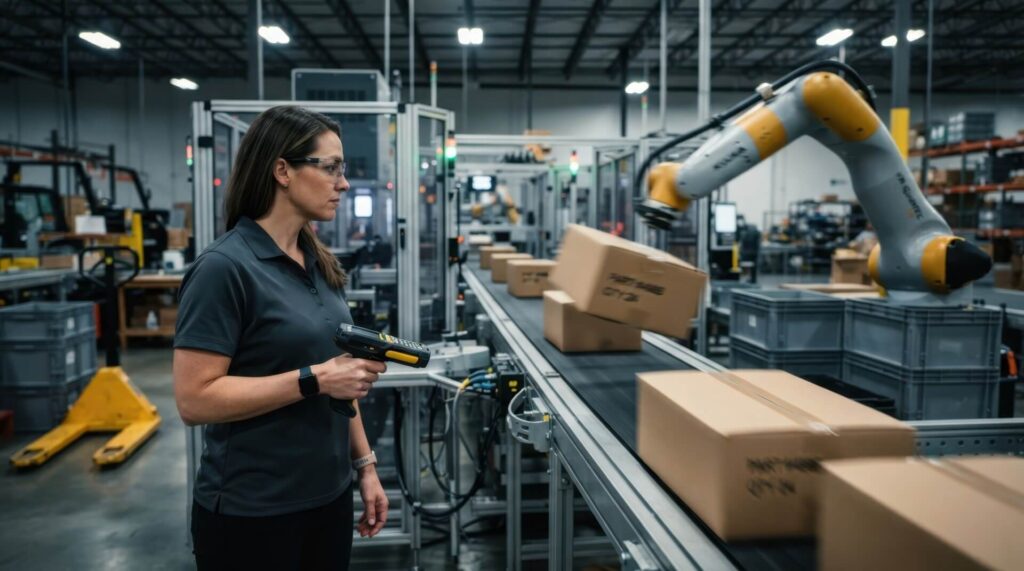
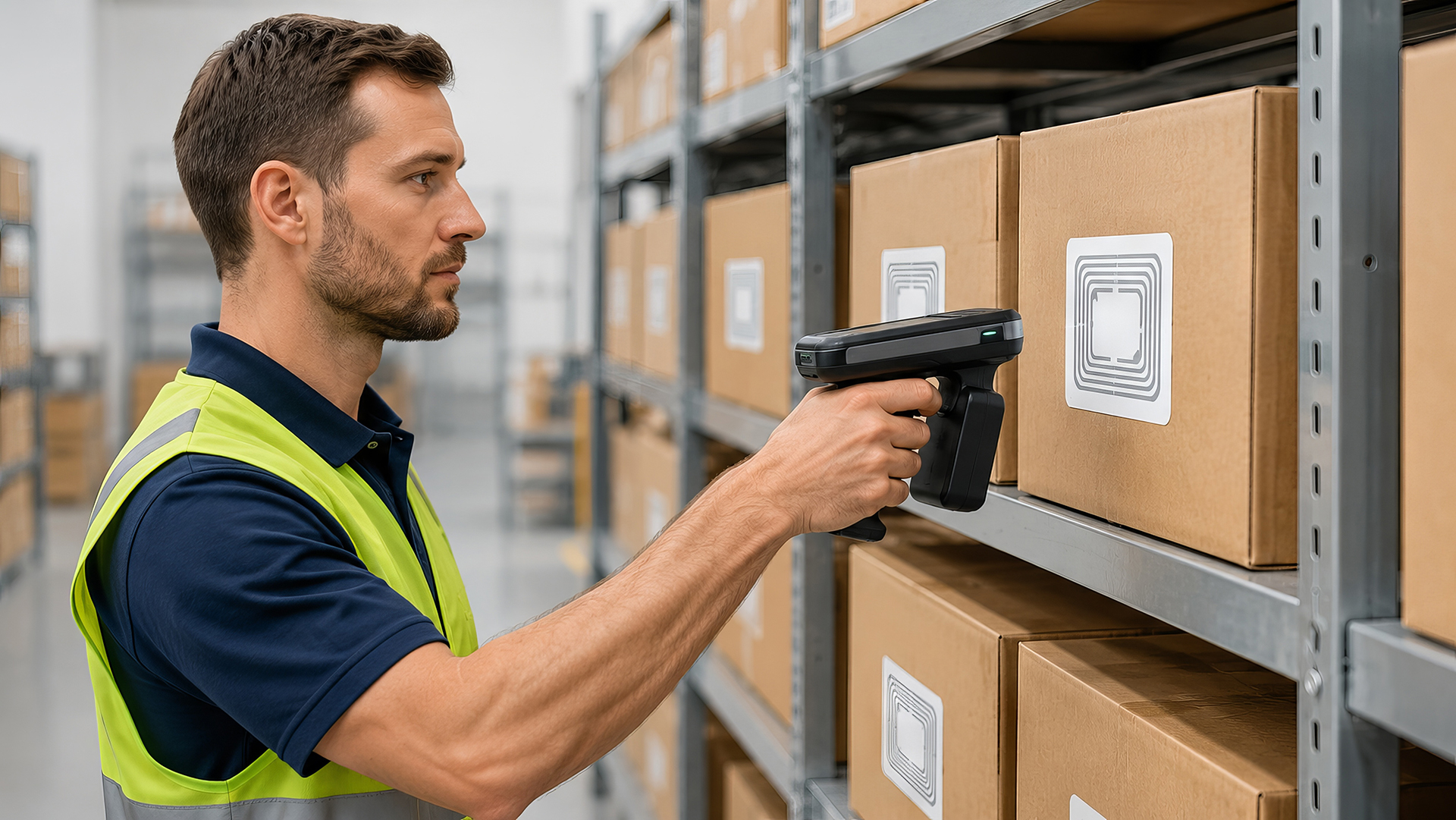
In practice, all you need is a handheld reader and tagged merchandise. The off-the-shelf RFID Inventory and Location System (SIL) is available immediately. It includes the ISS NEO handheld reader, proprietary software, a one-year licence, a set of tags and online training. It lets you carry out a count during opening hours without disrupting customer service. Locating a specific product on the sales floor or in the backroom takes a moment.
The Scale of Losses in Polish Retail
Data from the Polish National Police Headquarters for the first half of 2026 reveal an important nuance. The total number of shoplifting incidents fell by 18.6% year on year. The decline, however, applies mainly to petty offences (up to PLN 800). The number of more serious criminal offences (over PLN 800) fell by just under 5%, and their share of all thefts rose from 13.9% to 16.2%. In other words, petty theft is declining, while more serious theft, involving higher-value losses, is becoming a relatively more significant problem.
For retailers, this means a growing risk of losses with a higher value per incident. This makes it all the more important to know exactly what went missing, from which zone and when. Only RFID read data provides this insight.
RFID in Shrinkage Reduction
RFID supports shrinkage reduction in several ways:
- Easier loss detection: Regular scanning quickly shows when and where goods disappeared from the system.
- Deterrent effect: Visible tags and exit gates act as a preventive measure.
- Distinguishing operational losses from theft: RFID helps separate handling errors from actual theft, making it easier to address the real cause of the problem. This matters because part of shrinkage stems from administrative and logistics errors, not theft alone.
RFID vs Traditional Anti-Theft Systems (EAS)
Conventional EAS (Electronic Article Surveillance) systems only signal an attempt to remove unpaid goods. They reveal nothing about what exactly went missing or what it was worth. Item-level RFID links the alarm to a specific, identified product. It also makes it possible to analyse movement patterns between store zones.
RFID in Fitting Rooms
In the apparel industry, a popular RFID application is the smart fitting room. Readers record which products customers try on and which ones they eventually buy. This provides valuable merchandising data and an additional control point supporting loss prevention. Apparel is also one of the segments where RFID is deployed on the largest scale.
RFID in Inventory Management and Omnichannel
RFID enables real-time inventory management and automatic goods receiving without scanning each pallet individually. It also supports omnichannel retail, such as orders placed online and collected in store, by improving stock visibility across all sales channels.
Accurate stock levels help avoid both empty shelves and excess inventory that ties up capital. Retailers can see which products sell best and which are slow-moving. They can then transfer stock between stores faster or plan deliveries.
RFID in Grocery and Discount Stores
In a grocery store, tagging every single item with RFID is often not cost-effective. With low-margin products, the cost of the label can exceed the profit on the item.
The technology does, however, prove effective in:
- delivery and returnable container control,
- higher-value goods such as alcohol, cosmetics and electronics,
- backroom and warehouse stocktaking.
In discount stores, where speed is key, RFID speeds up pallet receiving and shortens the entire counting process.
Benefits of RFID for Retailers
The main benefits of RFID for retailers include:
- stocktaking in a fraction of the previous time, including during opening hours,
- accurate stock levels and fewer out-of-stocks,
- delivery verification without scanning every pallet and carton,
- better inventory visibility for omnichannel sales,
- loss data broken down by zone, product and time,
- higher productivity, as staff spend more time serving customers.
The highest return on investment usually comes from deployments in apparel and in distribution centres, where product volumes and turnover rates are highest.
Challenges and Costs of RFID in Retail
Implementation requires investment in tags and readers. It also requires careful installation design: the placement of portals, antennas and read points must ensure reliable performance in the specific store.
Implementation cost remains one of the main challenges for retailers. It is therefore worth calculating the business case separately for each product category, taking into account the scale of operations and margins.
RFID generates large data streams that must be integrated with the POS, ERP or WMS system.
Privacy also deserves attention. The tag serves solely as a product identifier and contains the product number. Customers’ personal data stays outside the RFID system.
How to Implement RFID in a Store
Implementation starts with an analysis of store processes: goods receiving, merchandising, stocktaking and returns. The system is then tested in a pilot programme, in one store or on a selected product category. Only after the results are confirmed is it rolled out across the entire chain.
The next steps are integration with sales systems, staff training and ongoing maintenance, including technical assistance, software updates and advice on expanding the system. The fastest start is often the off-the-shelf SIL package, which can later be extended to further stores and functions.. The fastest start is often the off-the-shelf SIL package, which can later be extended to further stores and functions.
RFID in Retail FAQ
Yes. This follows from Article 26 of the Polish Accounting Act. Inventories at retail points of sale recorded at value must be physically counted at least once a year.
Under Article 77 of the Accounting Act, the penalty is a fine or imprisonment of up to 2 years, with liability resting on the head of the entity.
RFID reads multiple tags simultaneously, without the direct optical line of sight required by barcodes. This significantly shortens the time needed for a physical count.
EAS only signals an attempt to remove unpaid goods. Item-level RFID identifies exactly what went missing and allows analysis of how goods move around the store.
Reading a rack takes a few seconds, and counting an entire store takes a fraction of the time needed with barcodes. The count can be scheduled at any time, including during opening hours, without involving the whole team.
The tag contains the product’s identification number. Customers’ personal data stays outside the RFID system.
Most often for delivery control, returnable containers, higher-value goods and backroom stocktaking. Tagging every single low-cost item is often not cost-effective.
ISS RFID designs and implements RFID solutions tailored to each client's warehouse and sales processes, in any industry. To find out how RFID can streamline stocktaking and reduce losses in your business, get in touch and we will prepare a tailored offer. Leave your contact details and we will call you back within 24 hours.