


RFID in Automotive: How Automatic Identification Supports Manufacturers, Parts Suppliers and Vehicle Management
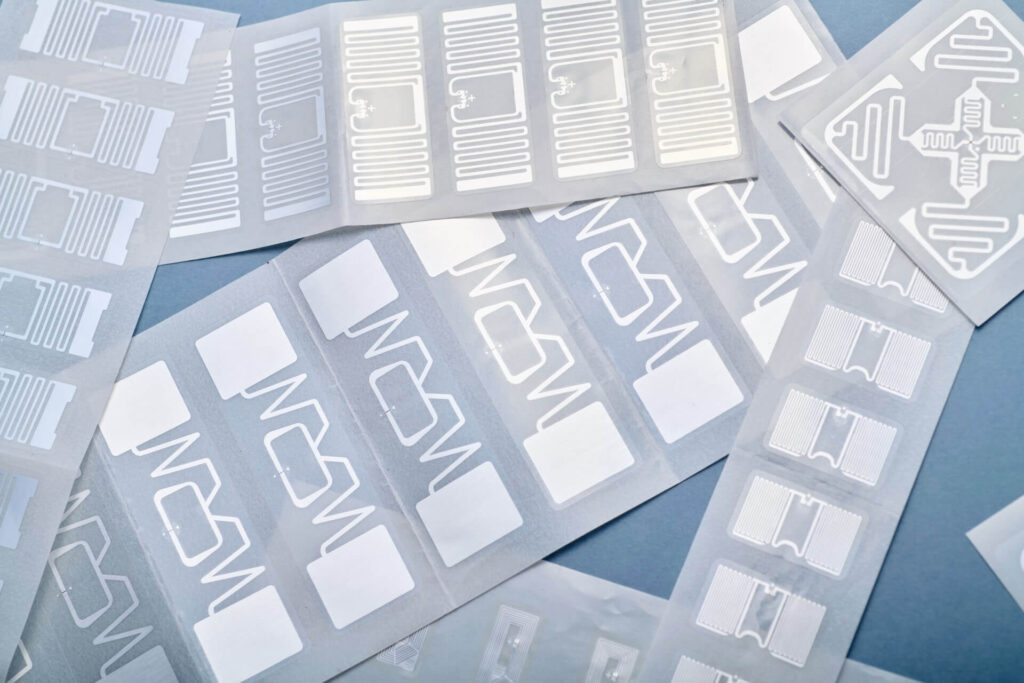
RFID (Radio Frequency Identification) is a technology that uses radio waves to identify objects contactlessly. In the automotive industry, it plays a key role on three levels:
- at vehicle manufacturers (OEMs): body tracking and quality control
- at parts and component suppliers: picking, sequenced deliveries and batch traceability
- in logistics and finished vehicle management
This article is aimed at automotive manufacturers, component suppliers at every tier of the supply chain, and logistics companies serving the automotive sector.
Why Does Car Manufacturing Require Precise Tracking?
Modern cars are highly customised. Customers order various combinations of engine, equipment and trim, and many different models are often assembled on the same production line. To avoid errors, such as fitting the wrong component to the wrong vehicle, every vehicle and its key components must be uniquely identifiable at every stage of production. A mistake has serious consequences, ranging from line downtime to a costly recall campaign.
How RFID Supports the Production Line: The Volvo Example
A well-documented example of RFID in automotive is Volvo Cars. The company uses passive UHF RFID tags to track vehicles at its plants in Belgium and China. The system covers approximately 2 million cars passing through the production process. The tag is attached to the vehicle chassis at the very start of the process and stays there until final assembly. This enables reads at successive workstations without manual scanning.
RFID at Automotive Parts and Component Suppliers
In the automotive sector, RFID also serves companies that manufacture parts and components for vehicle manufacturers: Tier 1, Tier 2 and lower-tier suppliers. This is where most component origin data is generated. Its accuracy determines the continuity of the customer’s assembly line.
Parts Picking and Sequenced Deliveries
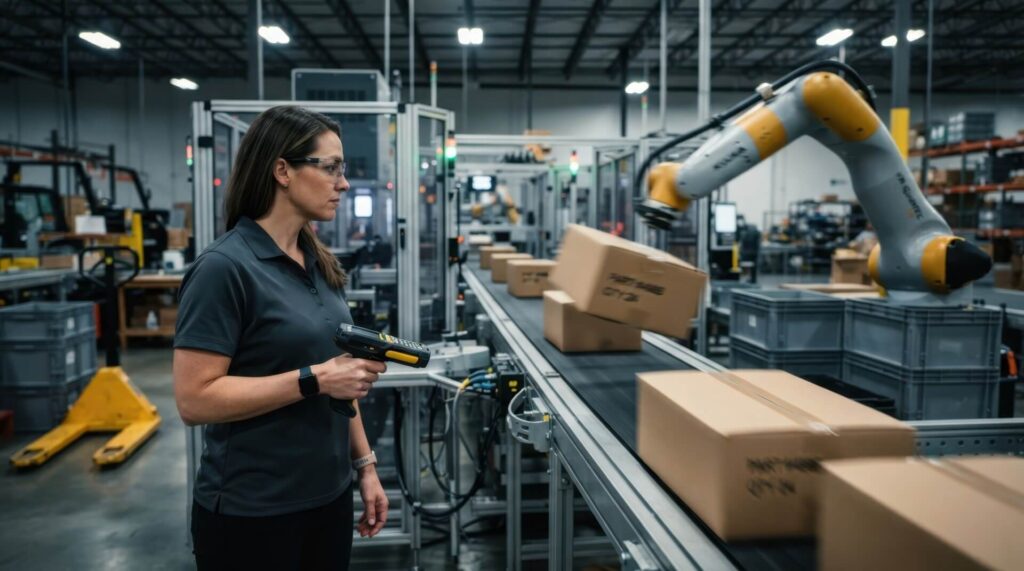
With just-in-time and just-in-sequence deliveries, parts must arrive at the plant in the order set by the assembly schedule. An RFID tag on the container or part makes it possible to check during picking that the correct variant is in the correct position in the sequence. A portal at the dock then confirms that the shipment is complete. An error caught at the supplier costs a fraction of line downtime at the manufacturer.
Returnable Containers
Parts circulate between the supplier and the plant in reusable crates, pallets and racks. RFID shows how many containers are at the supplier, in transit and at the customer. This reduces losses and simplifies settlements.
Batch Traceability and Claims
When a customer reports a defect, the supplier must quickly identify the source of the problem: the material batch, date, workstation and process parameters. RFID reads stored in the database link each part to its production history. This streamlines claims management and narrows corrective action down to the parts that are actually defective.
Parts Warehouse and Tool Room
RFID speeds up inventory counts of work-in-progress and finished goods, as well as control over the issue of moulds, fixtures and gauges. In automotive, on-metal tags resistant to oil and high temperatures are particularly important. The off-the-shelf RFID Inventory and Location System (SIL) is enough to get started. It is available immediately and can be expanded to further areas.
Why Does RFID Outperform Barcodes in Harsh Production Environments?
The paint shop is one of the most demanding environments in the entire car manufacturing process. The body passes through electrocoating baths that protect against corrosion, several coats of paint and curing in high-temperature ovens. Under such conditions, a barcode is easily soiled or damaged and requires a direct optical line of sight. An RFID tag in a suitable protective housing remains readable despite the high temperatures and chemical environment of the paint shop. Reading takes place automatically, without line of sight.
Barcodes and QR codes work well in clean assembly areas, while vision systems inspect the quality of welds and coatings. RFID complements these methods where optical reading falls short: in welding, painting and dirty environments.
RFID and IATF 16949 Requirements
The automotive industry is governed by IATF 16949, the international quality management standard for automotive manufacturers and suppliers. Clause 8.5.2 (“Identification and traceability”) requires the organisation to identify the status of the product at every stage of production, service provision and after delivery. Traceability must also be maintained and appropriately documented.
In practice, this means keeping full records of batches, components and processes. RFID and RTLS (real-time location systems) are among the leading technologies for meeting this requirement automatically, without placing the extra burden of manual data recording on staff.
Traceability also serves as a tool for automating production data collection. Every read is stored in the database together with the time, workstation and process parameters. This enables precise real-time production monitoring, ensures regulatory compliance and allows a fast response to defect reports, which builds customer trust.
RFID in Logistics and Finished Vehicle Management
In storage yards, logistics centres and at dealerships, RFID speeds up vehicle inventory. Cars are registered as they pass through a portal or during a walk-round of the yard with a reader, without manually recording VIN numbers.
In everyday use, RFID is found in:
- immobilisers that authorise ignition and vehicle access control systems,
- electronic toll collection,
- fleet management, in combination with geolocation.
Summary: Traceability in the Automotive Industry
RFID technology gives manufacturers and suppliers full control over the flow of materials, components and vehicles. Efficiency increases, errors are detected sooner and operating costs fall, both in a large plant and at a parts supplier.
Implementation starts with a process analysis and a pilot in a selected area. After go-live, ISS RFID provides training, technical assistance and support as the system is expanded.
RFID in Automotive FAQ
RFID enables unique identification and tracking of the vehicle and its components at every stage of production. This helps prevent assembly errors with highly customised orders.
Yes. Suppliers use RFID in picking and sequenced deliveries, in returnable container management, in batch traceability, and in parts and tool warehouses.
An RFID tag requires no direct optical line of sight and remains readable despite high temperatures and an aggressive chemical environment. A barcode, by contrast, is easily soiled or damaged.
Clause 8.5.2 of IATF 16949 requires identification of product status at every stage of production, service provision and after delivery, as well as appropriately documented traceability.
Among other things, for ignition authorisation (immobilisers in car keys), electronic toll collection and fleet management in combination with geolocation systems.
ISS RFID designs and implements RFID solutions tailored to each client's production and logistics processes, in any industry. To find out how RFID can improve traceability and quality control in your business, get in touch and we will prepare a tailored offer. Leave your contact details and we will call you back within 24 hours.