

The main types of RFID readers are handheld, fixed and integrated models. RFID (Radio-Frequency Identification) technology is gaining popularity across many industries because it streamlines the identification and tracking of assets. At the heart of these systems are RFID readers, also known as radio frequency identification readers. A reader is a device that uses radio technology to read RFID labels and transponders via radio waves and passes the data to management systems.
RFID readers are classified by operating frequency. ISS RFID focuses on the UHF band (860-960 MHz). These ultra-high-frequency waves perform best where a long read range and automated identification of many objects at once are essential.
This article is intended for companies and individuals planning to implement RFID to optimise identification processes and asset control. It shows how to choose the right devices for a given application and covers their types, uses and examples of deployments in various industries.
UHF RFID Readers: The Band ISS RFID Works In
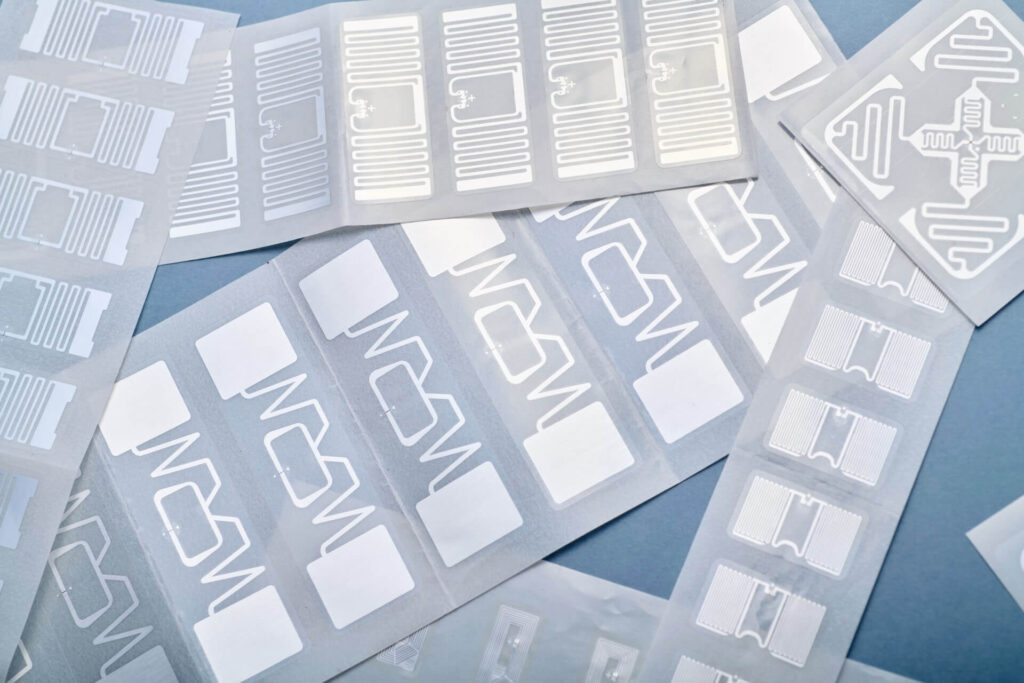
ISS RFID solutions operate in the UHF band (ultra high frequency, 860-960 MHz). The reader emits a radio signal that powers the passive tag. The energy from the radio waves replaces an internal power source such as a battery. The tag then responds by transmitting the unique data stored on its chip, such as an EPC number. Thanks to radio wave propagation, reads are possible from a distance of several metres, or even more than ten metres, and cover many tags simultaneously. This is the longest read range among RFID technologies.
In Europe, UHF readers operate at 865-868 MHz in accordance with ETSI EN 302 208. Versions for other frequency ranges are also available, such as 902-928 MHz in the USA, so it is worth checking the device’s regional variant before purchase. Tags compliant with the EPC Gen2 standard (ISO/IEC 18000-63) work with readers from different manufacturers. For these reasons, UHF is the standard in logistics, warehousing, manufacturing and stocktaking.
Handheld RFID Readers
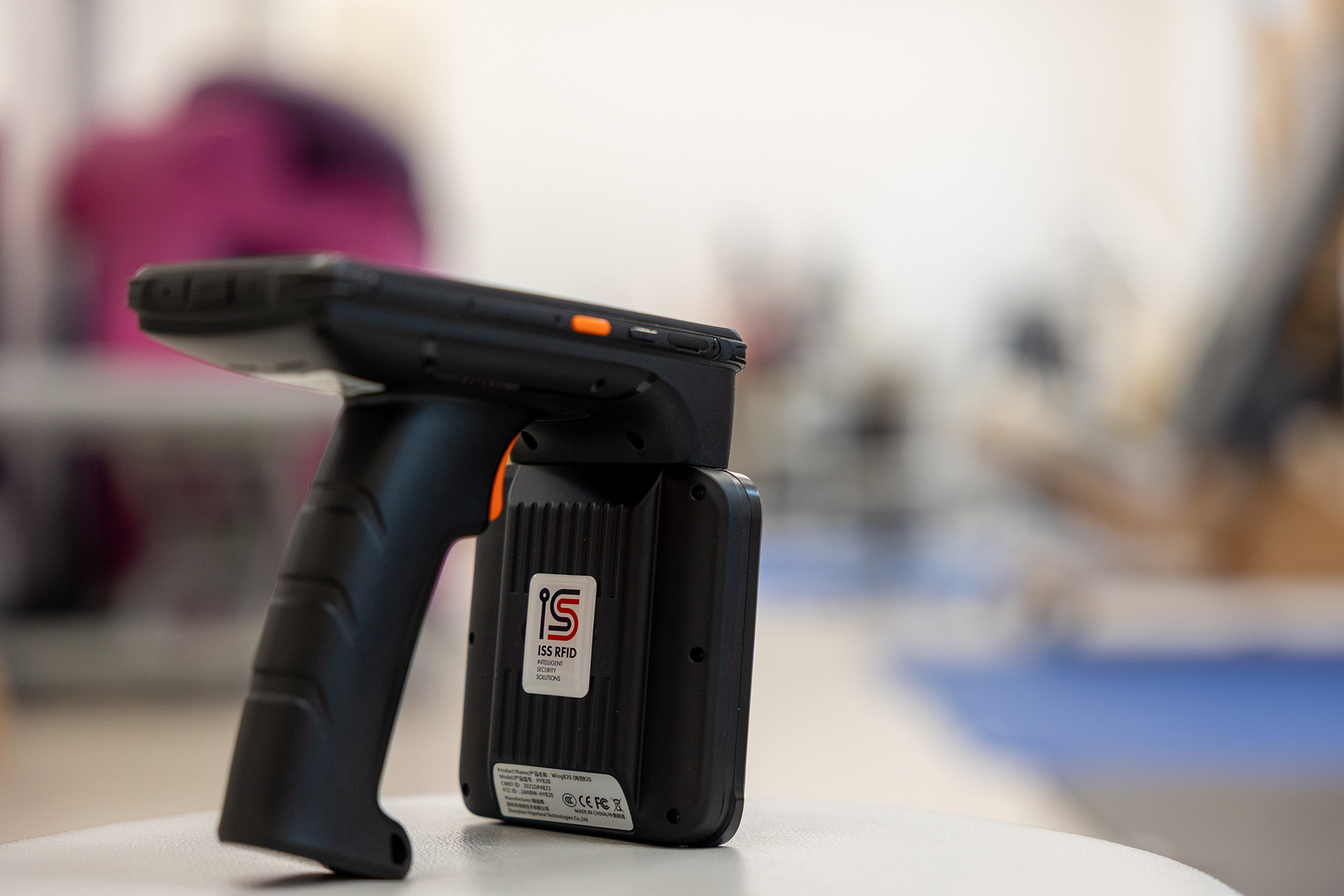
Handheld RFID readers are portable devices with a built-in antenna that read RFID tags and labels in different locations. A single reader captures multiple identifiers simultaneously. Their mobility makes them indispensable in dynamic working environments. Unlike barcode scanners, they read tags without a direct line of sight. Typical applications include:
- Stocktaking: fast scanning of fixed assets and products, locating items, tracking RFID labels in the field and tracking goods
- Delivery verification: instant checks that a delivery matches the order
- Field asset management: identifying equipment and materials, for example on construction sites
One example of a handheld reader deployment is the ISS Yachts system. Waterproof RFID scanners with an integrated touchscreen display and real-time data transfer streamline the management of yacht equipment, with information reaching the user or system through an interface.
The Handheld Reader in the Off-the-Shelf Inventory System (SIL)
The handheld RFID reader is a core component of the RFID Inventory and Location System (SIL), an off-the-shelf ISS RFID solution available immediately. The package includes the ISS NEO handheld reader, proprietary software, a one-year licence, a set of tags and online product training. The reader confirms in seconds whether tagged items are in a room, without opening cabinets. Its radar function indicates the direction of the item being searched for, based on signal strength. The solution can later be expanded with additional modules.
Industrial Fixed RFID Readers
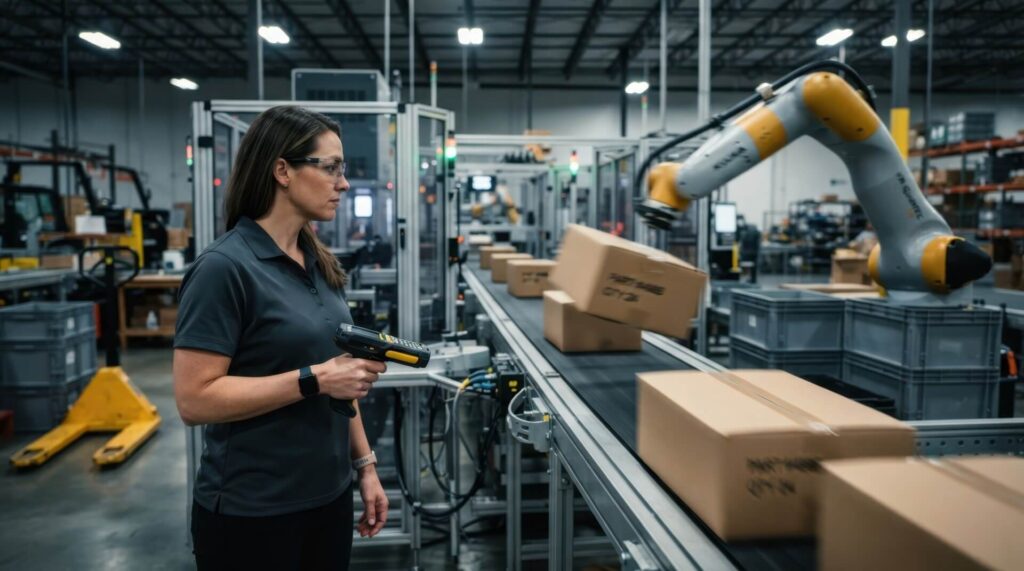
Fixed readers are permanently mounted at specific locations or critical points, such as warehouses or production lines, and automatically read tags within their range. They come in two versions: with a built-in antenna, known as integrated readers, or as standalone units that require external antennas. Their main applications include:
- Monitoring the flow of goods: automatic recording of product movement through warehouse dock doors
- Production process control: identifying components on production lines. UHF readers are used most often here, as UHF RFID enables reads over longer distances, up to more than ten metres.
- Fixed asset and returnable packaging management: directional flow detection of RFID-tagged assets at critical points
In harsh working conditions, such as production halls or high-bay warehouses, industrial RFID readers prove their worth. They are resistant to external factors such as dust, moisture and high temperatures. Industrial models also offer a longer read range than compact desktop readers. The choice of a specific model depends on the type of interaction and the nature of the task.
One example of a fixed reader deployment is a food production plant where RFID gates were installed. Automated asset tracking significantly shortened stocktaking time and eliminated human error. The RFID readers deployed must operate in compliance with international standards.
Integrated RFID Readers
Integrated readers are compact devices that house both the antenna and the RFID reader module in a single enclosure. Their integration with the infrastructure also depends on the method of communication with the system, such as USB, Wi-Fi or a connection to a computer via a suitable interface. Small USB readers are used to read and encode tags, particularly in office settings. Typical applications include:
- Packing and issue stations: verifying the contents of a parcel or the equipment being issued
- Label encoding: writing and verifying data on a tag before it is applied
- Retail points of sale: fast product reading at the checkout and support for document tracking
Integrated UHF readers allow the transmit power to be adjusted, so they read only items in a defined zone, such as on a counter, in a tunnel or at a workstation, without stray reads from the surroundings.
RFID Reader Communication Interfaces
The reader passes reads to the computer system via a communication interface chosen to suit the workplace:
- Fixed readers are most often connected via Ethernet, which ensures stable operation on the company network.
- Desktop readers connect via USB.
- Handheld readers transfer data via Wi-Fi or Bluetooth to devices such as smartphones and tablets, without a cable connection, so reading can take place anywhere.
Several external antennas are usually connected to a fixed reader, allowing an entire gate or zone to be covered by a single device.
How to Choose an RFID Reader
The right type of RFID reader depends on the company’s specific needs and operating conditions:
- Handheld readers provide flexibility.
- Fixed readers can cover a large identification area.
- Integrated readers are the ideal solution for compact installations and office applications.
In retail, RFID technology is increasingly replacing traditional barcodes, because a barcode scanner requires a direct line of sight to the code. Industrial-grade readers and antennas also work outdoors in changing weather conditions. The reader should also be chosen with the integration method and the type of tags in mind. RFID reader prices start from a few hundred PLN.
RFID Reader FAQ
Usually a handheld UHF reader, which reads many tags simultaneously from a distance of several metres. A ready-made solution is the SIL package with the ISS NEO reader.
A fixed reader works in a permanent location, such as a warehouse dock door, and records tags automatically. A handheld reader is portable and works well for stocktaking and delivery verification.
It is worth consulting experts about a planned RFID implementation in order to select the solutions that best match your individual needs.